

Blood flow restriction training(BFRT) is not new(since 1960s), & originated from Japan under the name KAATSU, by Dr Yoshiaki Sato. It's been used in both pain management/ treatment during physical therapy, in sports medicine(performance, physical therapy).
Is Blood Flow Restriction Training Safe?

BFR training method has been shown to be safe enough just as a regular strength training, or any high intensity exercise(albeit done in good form/techniques). However as with any intervention that includes any form of fitness or physical therapy, safety must always be considered before trying blood flow restriction training.
While it looks like something we see as a fad, blood flow restriction training is just about catching up in Asia, particularly Singapore with so many studies on a range of conditions from:
- Muscle growth
- Muscle atrophy
- Aerobic capacity(VO2 max)
- Muscle recovery
- Obesity
- Knee injury(post ACL surgery)
A study on how subjects gained muscle mass just by walking on the treadmill which is interesting if you think about it as these subjects were just doing as little as 3 weeks & for 15 mins a session! Think about how you would have more muscle growth(muscle hypertrophy) if you are already doing resistance training & add blood flow restriction to your current workout.
Side Effects of Blood Flow Restriction Training

Limb occlusion pressure is the same as a workout in terms of side effects which includes delayed onset muscle soreness, however in some instances, there may be some blotches of petechiae or bruising which is normal especially when you are doing it with high intensity training. When you restrict blood flow & couple it with exercise, muscle damage
But there are some people however that cannot use BFRT, here’s a list of common conditions that may exclude someone from being able to use BFRT.
- Unstable Cardiac Disease
- Active or recent blood clots including Deep Vein Thrombosis (DVT)
- Severe varicose veins
- Pregnancy
- Active infection
- Wounds
The Science of BFRT(blood flow restriction training)

The training method with blood flow restriction training work is done by restricting the muscle tissue of blood flow & manipulating of the rest periods, causing metabolic stress. Performing BFR exercises with any form of resistance training increases your metabolic stress on your muscles which causes your nervous system to fire the surrounding muscle group to increase in activation. This is done via obtaining partial arterial blood flow as oxygenated blood flow decreases & lactic acid build up with just 20-30% of the usual load with resistance exercise. Blood flow restriction training work induces a great release of growth hormone, allowing muscle hypertrophy(muscle growth), improved aerobic capacity, & be able to train for longer training durations once you come off the blood flow restriction training work. An increased metabolic stress caused by the blood pooling via the BFR cuff pressure also helps increase muscle strength by increasing the motor units following a specific strength training. With blood flow restriction training, growth hormone increases & for most people it's an added advantage especially when you have an injury that you are trying to heal from.
Delayed Onset Muscle Soreness

There are a few factors that goes into DOMS which may include moderate aerobic exercise, normal exercises such as HIIT(high intensity training) by itself. The best part about BFR(blood flow restriction) training method is that muscle damage takes lesser effort to recover as compared to normal exercises(resistance training) vs BFR training. The skeletal muscle hypertrophy is caused by venous blood flow creating an environment where your muscles work harder due to the working muscle mass that is working & calls for other muscle groups to kick in & help with the exercise. In instances where muscle soreness due to muscle damage from blood flow restriction training, your body increases in the production of growth hormone, which equates to higher fat loss post exercise.
How fast does BFR training results show?
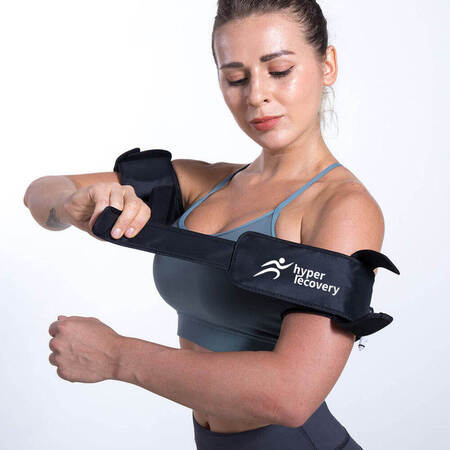
It depends on your goals & the specificity of it, however BFR training / blood flow restriction training produce consistent muscle adaptations thus making it quicker, safer, & much better comparing to just high intensity exercise that you would do in a gym such as circuit training or strength training. Studies have demonstrated that just about as little as 3 weeks to experience
- Improved aerobic exercise capacity(VO2 max)
- Increased muscle size(muscle hypertrophy)
- Lower blood pressure relative to non BFR training method
- Increased muscle protein synthesis
- Strength
How often should i do BFR(blood flow restriction training)?

With smart exercise prescription for strength training & blood flow restricted exercise...& with all the research that is currently available currently, 3 times weekly is more than sufficient to have muscle hypertrophy & all the health benefits it comes along with. Although blood flow restriction training can be done regularly, research which compares a lowered frequency of twice weekly has the same results as those who were working out, however the more seasoned athletes on the higher end spectrum would need to cycle their BFR training(blood flow restriction training) to three times weekly alongside usual resistance training.
Find a BFRT Training In Singapore

Since 2019, we are the only studio to conduct BFR training in with resistance training/ aerobic training helping you to increase muscle strength via AOP(arterial occlusion pressure) & our clients get the same results training 2-3 times weekly as compared to without BFR training(blood flow restriction training). If you would like to make an appointment for physical therapy for strength training you may contact our team at +65 8973 7619 to make an appointment for an assessment if you would be best for BFR training. For group classes that includes BFRT(blood flow restriction training), check out our schedule below.