
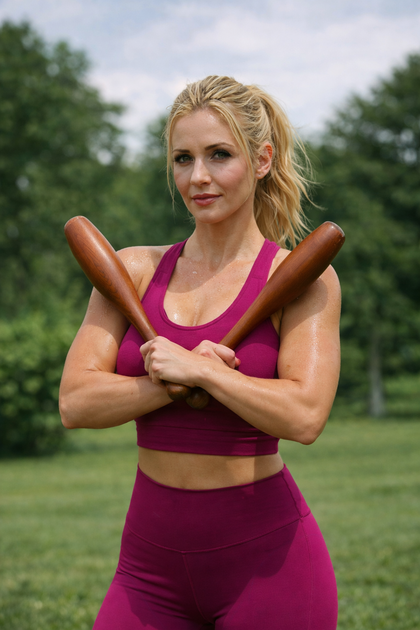
The truth is, Indian clubs are one of the oldest movement training tools in the world — yet they are experiencing a modern resurgence among athletes, coaches, therapists, & serious fitness enthusiasts who want better shoulder health, coordination, & long-term joint mobility.
This guide explains everything clearly so you can decide whether Indian club training is right for you — & where to learn it properly in Singapore.
A 4-week beginner course in a small group (max 6), at 151A Kitchener Road, near Farrer Park MRT.
• Thursdays, 7:00 to 7:55pm: 26 Nov, 3 Dec, 10 Dec & 17 Dec 2026
• $180 for all 4 sessions ($45 a session), clubs provided
• Builds slowly from the basics: grip, shoulders, core, balance & coordination
Can’t make these Thursdays? The next batch’s dates come out in December. Message us & we’ll let you know first.
What Are Indian Clubs?
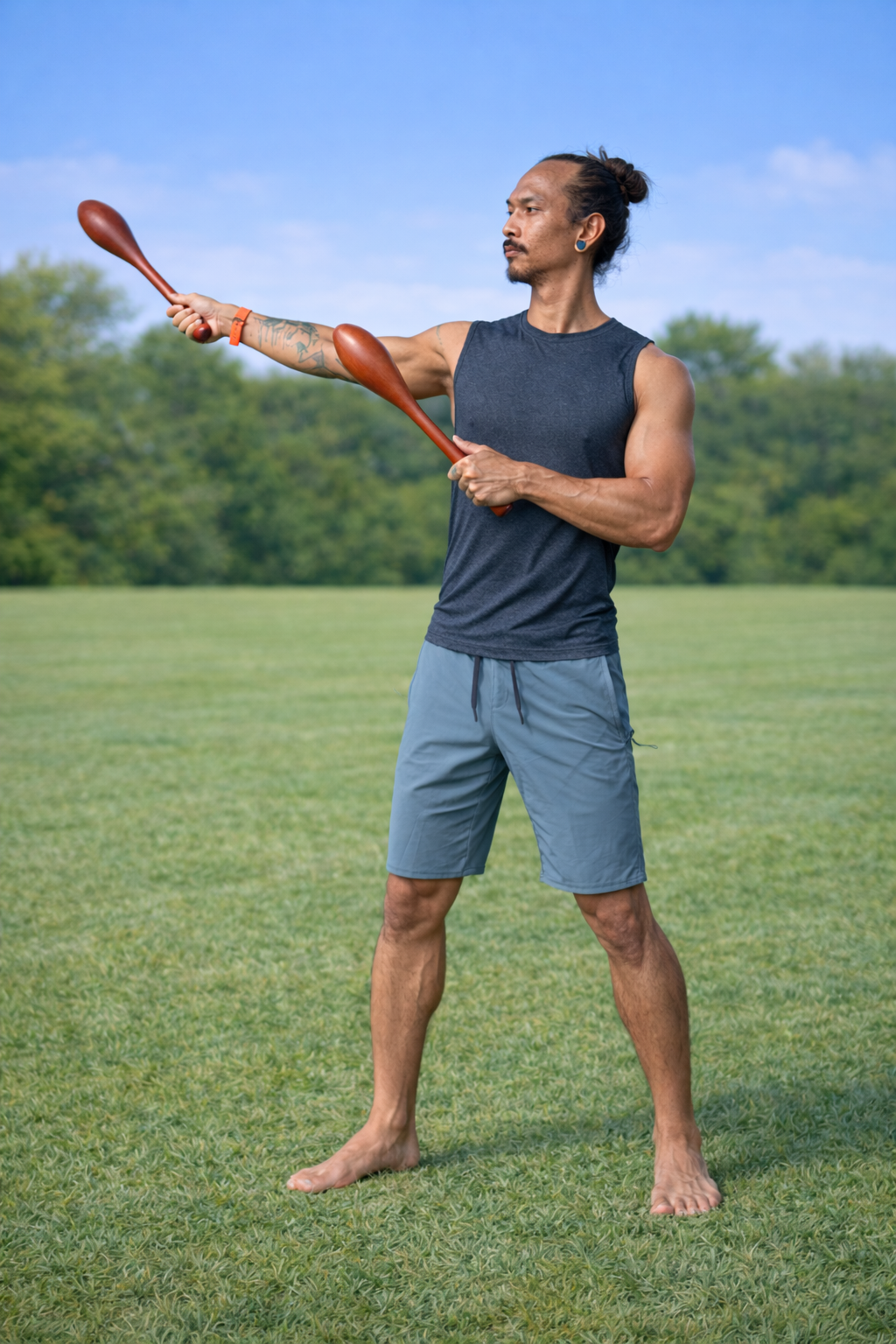
They originated in ancient Persia & India, where warriors used them to build strength, coordination, balance, & endurance for combat training. Later, they became part of physical education systems in England, Europe, & the United States.
Unlike dumbbells or barbells, Indian clubs create movement through circular arcs rather than straight lines. This allows them to train:
- Shoulder stability & joint health
- Coordination & motor control
- Range of motion in the upper body
- Core strength through rotational movement
- Balance & posture
Because the weight sits away from the hand, Indian clubs create shifting inertia during the swing, forcing the body to stabilise dynamically. This is why club swinging is considered both a strength & neurological training method.
Why Are They Called Indian Clubs?
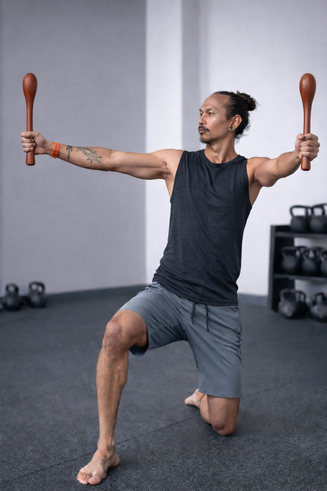
Although their practiced roots trace back to ancient Persia & Indian culture(eg wrestling), the British popularised the term “Indian clubs” when they introduced them into military access & physical education programmes in university.
By the early 1900s, club swinging was practiced worldwide & even appeared as an Olympic event.
Introduction to Club Swinging
This style of motion improves the body differently from standard strength workout because the weight is constantly in motion. With the swing, the body must stabilise, coordinate, & control rotation through multiple joints at once.
Club swinging can help different areas more efficiently:
- Shoulders: Improves shoulder stability, joint lubrication, & rotator cuff strength through controlled circular motion
- Elbows & wrists: Enhances joint resilience, grip endurance, & connective tissue strength
- Thoracic spine: Encourages better rotation, posture, & ribcage mobility
- Core & hips: Builds reflexive core strength by resisting rotational forces during the swing
- Nervous system: Improves timing, coordination, rhythm, & motor control through patterned movement
Because club swinging develops patterns rather than isolated muscles, it is often used for rehabilitation, athletic preparation, mobility development, & long‑term joint health.
For many people, it becomes a bridge between corrective exercise, strength work, & skill‑based balance.
Types of Indian Clubs & Their Uses
Lightweight clubs- lighter clubs (1–2 lb each)Used for:
- Mobility work
- Rehabilitation
- Shoulder warm-ups
- Beginners learning coordination
Traditional wooden clubsUsed for:
- Skill development
- Indian club exercises
- Rhythm & coordination training
Heavy clubs or steel clubsUsed for:
- Strength training
- Rotational power
- Advanced athletes
Most people begin with lightweight clubs before progressing to heavier tools once technique & control improve.
What Weight Should Beginners Start With?
Indian club swinging is not about lifting heavy weight early. It’s about learning control, rhythm, & range of motion first.
Starting too heavy often leads to:
- Loss of coordination
- Shoulder tension
- Limited range
- Poor cognitive
With regular practice, the body adapts quickly & heavier clubs can be introduced safely.
Benefits of Indian Club Exercises
1. Improves Shoulder Health & StabilityThe circular motion lubricates joints, strengthens connective tissues, & improves shoulder stability — making it useful for both athletes & rehabilitation.
2. Builds Core Strength Without CompressionBecause the swing creates rotational force, the body must stabilise through the torso. This develops functional core strength without heavy spinal loading.
3. Enhances Coordination & Motor ControlClub swinging engages both hemispheres of the brain. This improves timing, rhythm, & movement awareness.
4. Increases Range of Motion & MobilityIndian club exercises move the joints through fluid patterns that restore range of motion & reduce stiffness.
5. Low-Impact Yet Highly Effective TrainingIndian club training is considered low impact but high skill, making it suitable for long-term training, rehabilitation, & movement education.
Indian Clubs in Modern Fitness & Rehabilitation
- Athletic training programmes
- Rehabilitation clinics
- Strength & conditioning systems
- Yoga & movement studios
- Martial arts training
They are especially valued because they bridge the gap between mobility work & strength training.
Rather than isolating muscles, Indian clubs train movement patterns, coordination, & joint health simultaneously.
Where to Learn Indian Club Training in Singapore
Since 2019, Movement & Sports Medicine Centre (MSMC) is currently the only facility in Singapore offering structured Indian club group classes, outdoor classes & personal training.
At MSMC, Indian club training is taught using a sports-medicine approach that focuses on:
- Shoulder health & injury prevention
- Proper biomechanics & coaching cues
- Progressive training systems
- Individual assessment before training
This ensures clients learn safely, efficiently, & with long-term results in mind.
Who Would Benefit from Indian Club Exercises?
People Seeking Injury Prevention
- Office workers with rounded shoulders or neck tension
- Individuals with limited motion in the shoulders or thoracic spine
- People returning to exercise after long inactivity
- Anyone wanting to maintain long‑term joint care
The circular nature of club exercises keeps joints moving in fluid patterns, which supports joint lubrication, posture, & muscular balance.
People Recovering from Common Injuries
- Shoulder impingement recovery
- Rotator cuff weakness or instability
- Elbow or wrist stiffness
- Postural strain from desk work
- Reduced thoracic mobility affecting breathing or form
The progressive loading allows the body to rebuild strength safely while restoring coordination.
Athletes & Active Individuals
- Combat exercises needing shoulder endurance
- Runners wanting better arm mechanics & posture
- Lifters looking to maintain shoulder health
- Recreational athletes wanting better movement efficiency
Indian club swinging improves stabilising muscles that traditional strength work often misses.
Older Adults & Long‑Term Health Focused Clients
- Older adults wanting to maintain mobility
- Individuals seeking low‑impact strength work
- People wanting better balance & coordination
- Clients focused on preventative health rather than maximal lifting
With regular practice, Indian club exercises help maintain independence, confidence, & functional strength benefits.
Develop a Better Body Through Circular Strength
Traditional gym training often focuses on pushing or pulling in straight lines. While this builds muscle, it does not always prepare the body for real‑world movement, sport, or injury resilience. Indian club training fills this gap by teaching the body how to move efficiently in all directions.
Circular strength from Indian club exercises can help the body develop in several key ways:
- Stronger shoulders through movement, not compression
The swinging motion strengthens stabilising muscles while allowing the joints to stay mobile rather than stiff. - Better posture through rotational control
Clubs encourage the thoracic spine to rotate naturally, helping reduce rounded shoulders & neck tension. - More resilient connective tissues
The continuous motion conditions tendons, ligaments, & fascia to handle force more smoothly. - Functional core strength
Instead of bracing rigidly, the core learns to stabilise dynamically as the clubs swing around the body. - Improved coordination & movement intelligence
Circular patterns challenge timing, rhythm, & spatial awareness, helping the body move with greater efficiency.
Final Thoughts: Are Indian Clubs Worth Learning?
Learn Indian Clubs Properly in Singapore
👉 Join Indian club group classes at Movement & Sports Medicine Centre
👉 Book a personal training session to learn the technique
👉 Get assessed to see how clubs can improve your mobility & shoulder health
Visit MSMC to start your Indian club journey with professional coaching.
Author
Jab is the founder of Movement & Sports Medicine Centre (MSMC) & the creator of the BreathEra® Breathwork Series. With more than 20 years of experience in sports medicine, fitness, & holistic wellness, he has trained thousands of clients & educated professionals worldwide. His expertise spans personal training, osteopathy-informed movement, Functional Stretch Therapy (F.S.T), breathwork, & applied neurology. Jab is passionate about making movement & recovery accessible to everyone — from everyday individuals seeking better health to trainers & therapists aiming to raise their standards of practice. When he’s not leading classes or teaching internationally, Jab is developing innovative programmes that blend science with holistic practices to help people move, breathe, & live better.