
The best exercise for osteoporosis combines strength training (resistance exercises with free weights, weight machines or elastic bands), weight-bearing exercises like brisk walking, a little impact exercise if it is safe for you, & daily balance exercises to prevent falls. Done regularly & built up gradually, these osteoporosis exercises can help slow bone loss, build muscle strength & lower your fracture risk. At MSMC (Movement & Sports Medicine Centre), near Farrer Park MRT, women over 50 start with a $190 full assessment so the plan fits their bone density results.
Maybe you've just had a bone density scan, & the word "osteoporosis" (or "osteopenia") is now on your report. Maybe your doctor said "do more weight-bearing exercise", & you left wondering what that actually means, & whether lifting anything is even safe now.
Here's the good news: the right exercise for osteoporosis is one of the most useful things you can do for your bones, your balance & your confidence. Strength training & some impact help load your bones, balance work lowers your risk of falling, & a few movements simply need a little care. This guide explains what helps, what to be careful with, what a safe weekly plan looks like for women over 50 in Singapore, & how to start without fear.
Key facts: exercise for osteoporosis
- What helps: resistance training for the major muscle groups, weight-bearing activity, light impact if cleared, & balance exercises.
- How often: strength training at least 2 days a week, weight-bearing physical activity on most days, balance practice daily.
- Be careful with: sit-ups, toe touches, bending forward under load & twisting under load, especially with low bone density or a past vertebral fracture.
- Who it's for: people with osteoporosis or osteopenia, especially postmenopausal women in Singapore.
- See a doctor first if you have new back pain after a minor bump, a recent fracture, or feel dizzy or unsteady.
- At MSMC: full assessment $190 (as of November 2026), then a plan that loads your bones safely. 151A Kitchener Road #02, Singapore 208526, near Farrer Park MRT. Appointment based, closed Sundays & public holidays.
- How to book: on Momence or WhatsApp +65 8973 7619.
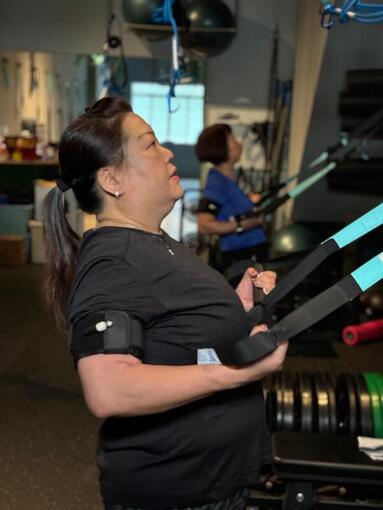
What osteoporosis is, bone loss & why exercise for osteoporosis matters
Osteoporosis is a disease where your bones lose density & quality, leaving weakened bones that are thinner, more fragile & more likely to break. Osteopenia is the milder stage before it. It affects men too, but bone loss speeds up for women in the years around & after menopause, as oestrogen drops, which is why so many postmenopausal women in Singapore hear about it after a routine scan. Low bone density means a higher risk of a broken bone, & a hip or spine fracture is the kind that matters most.
It's often called a silent condition, because you can't feel your bones thinning. Many people only find out after a broken bone, or from a bone mineral density (BMD) test, which is the main way doctors check for it. Yes, you can have osteoporosis & never break a bone, especially if you stay active, strong & steady on your feet.
Bone is living tissue. Your bone cells are always breaking down old bone & working to rebuild bone, laying down new bone tissue, & they respond to load. When your muscles work & pull on your bones, & your bones carry your own body weight, it sends a signal to keep bone mass up. When they aren't loaded much, that signal fades & the deterioration speeds up. Exercise helps healthy people build bone when they're young; later in life it mostly helps you keep what you have.
That's why exercise sits alongside medication, calcium, vitamin D & protein in most plans for treating osteoporosis, & why the International Osteoporosis Foundation recommends regular exercise to improve bone health. Systematic review evidence in postmenopausal women suggests exercise programmes, especially ones that combine several types of exercise, can slow bone loss a little. Exercise doesn't replace your doctor's treatment. It works with it, & it does something medication can't: it builds the muscle strength & balance that stop you falling in the first place.
Bone health & bone strength: lower your fall risk
Falls are a major cause of fractures: most bone fractures linked to osteoporosis happen after a fall. So a good exercise programme for people with osteoporosis has two jobs:
- Load your bones, with strength training & some impact, to help keep or improve bone density
- Prevent falls, with balance exercises & lower body strength, so you stay steady on your feet
It is important to do both. For people with osteoporosis, a regular, well-planned exercise programme can also improve posture, improve balance & help with back pain, energy, mood & independence. Many women tell us the biggest change isn't on the scan, it's feeling confident walking, carrying the shopping & travelling again.
The best osteoporosis exercises: recommended exercises
There's no single best exercise. Most guidance recommends combining weight-bearing exercise, resistance (strength) training & balance training, so the best plan mixes four types of exercise, built up gradually.
1. Strength training with free weights, machines & elastic exercise bands
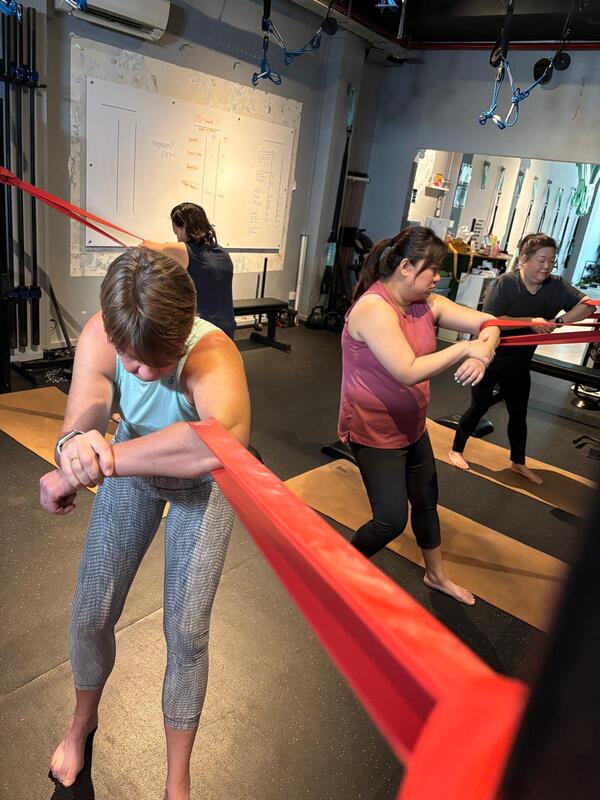
Strength training, also called resistance training or weight lifting, is the foundation. It uses your own body weight, resistance bands (elastic exercise bands), free weights like dumbbells, or weight machines to strengthen your muscles. Progressive resistance training, where the load is progressively increased over time, is what research on bone health usually tests. Resistance exercises strengthen bones because lifting a weight that feels challenging makes your muscles pull hard on your bones, especially the hips & spine, which are the sites that matter most for fractures.
Good muscle strengthening exercises & compound movements (exercises that use several joints at once) include:
- Sit-to-stand or squats to a chair, holding a dumbbell or kettlebell once you're ready
- Deadlifts with a hip hinge, keeping your back straight & bending from the hips, often starting with a light kettlebell from a raised box
- Step-ups onto a low step, adding weights over time
- Lunges or split squats, holding onto support at first, then weighted lunges
- Rows, such as the bent over row (see the bent over row steps below), with resistance bands, a dumbbell, a cable or a weight machine, for upper back strength & better posture
- Wall push-ups or bench presses, for the arms & chest
- Carries, holding weights at your sides & walking tall, which also works the abdominal muscles
For people with osteoporosis, a sensible start is resistance exercises for each of the major muscle groups, using a weight you can lift with proper form about 8 to 12 times, where the last couple of reps feel hard but controlled. Light weights are a good start, but your bones respond best when the load is gradually increased over weeks & months.
2. Weight-bearing exercises & impact exercise
Weight-bearing exercises are anything where you're on your feet, carrying your own body weight. Weight-bearing exercises with some impact load bone more than gentle ones. Brisk walking, stair climbing, dancing, playing tennis, hiking & low impact aerobics all count as weight-bearing activity, & they help strengthen bones in your lower limbs, hips & spine. In daily life, choosing to climb stairs instead of taking the lift adds up too. Around 30 minutes of physical activity on most days is a good goal to build towards, & it doubles as aerobic exercise for your heart. For general health, Singapore's guidelines suggest at least 150 minutes of moderate activity a week, & choosing weight-bearing activities for some of that time helps your bones too.
Low-impact activities like walking are a great base, but bones often need a little more. When it's safe for you, light impact can be added in small doses: heel drops (rise onto your toes, then drop onto your heels), marching, stepping off a low step or small hops. A handful of these, a few days a week, is enough. Whether impact is right for you, & how much, depends on your bone density results, fracture history & joints, which is exactly what an assessment checks.
Swimming, cycling & elliptical training machines are good aerobic exercise for your heart, lungs & joints, but because they don't load your bones much, they shouldn't be the only exercise you do.
3. Balance exercises to improve stability & prevent falls
Balance exercises improve stability & lower your risk of falls, & so of fractures. Balance is a skill, & it can be trained at any age. Simple balance training exercises include:
- standing on your right leg, then your left, holding a counter or chair
- heel-to-toe walking along a line
- stepping in different directions
- standing up from a chair without using your hands
- tai chi, which is well known for helping balance in older adults
Practise a few minutes most days to improve balance. Balance often improves faster than bone density, so this is usually where you'll notice changes first.
4. Posture & back extension osteoporosis exercises
Osteoporosis can affect the spine, & many women notice their upper back starting to round; poor posture like this adds strain to the front of the spine. Exercises to improve posture strengthen the muscles along your back & between your shoulder blades, such as gentle back extensions lying on your front, "W" pulls with a band & rows, along with stretches for tight hip flexors & chest, help you stand tall & take pressure off the front of your spine.
Five osteoporosis exercises to learn first, step by step
These osteoporosis exercises are a common starting point for an exercise programme. Learn each one with light or no weight first, & stop if you feel sharp pain. A physical therapist, exercise physiologist or coach can check your form.
Sit-to-stand
Starting position: sit on the front of a firm chair, feet shoulder width apart & flat on the floor. Lean forward from the hips, stand up tall, then slowly lower back down. 8 to 12 times. Hold a dumbbell at your chest once it feels easy. It builds the leg muscles & hip strength behind bone strength in the hips.
Bent over row with elastic exercise bands or a dumbbell
Starting position: feet shoulder width apart, knees bent a little, hinge forward from the hips with a long, straight back, holding a band anchored low or a light dumbbell, one hand on a bench for support if needed. Slowly pull your elbow back, squeezing your shoulder blades together, then slowly lower. 8 to 12 each side. The bent over row strengthens the upper back muscles & helps posture, & a one-arm bent over row with a dumbbell is a good next step.
Split squat or weighted lunges
Starting position: one foot forward, one back, holding a counter. Bend both knees to lower your body, then push back up. 8 to 10 each side. When steady, hold light dumbbells.
Heel drops
Starting position: stand tall, holding a counter. Slowly raise yourself onto your toes, then drop onto your heels with a gentle thud. 10 to 20 times, a few days a week, only if your doctor has cleared you for impact.
Wall push-up
Starting position: hands on a wall at shoulder height, feet back a step. Bend your elbows to bring your chest towards the wall, then push back. 8 to 12 times.
Osteoporosis exercises to avoid or change
Most movements are fine when they're done with good form & the right load. But certain exercise choices are worth being careful with, especially if you've had a spinal fracture or your bone density is low.
| Be careful with | Why | Try this instead |
|---|---|---|
| Sit-ups & crunches (abdominal exercises that curl the spine) | Repeated, loaded forward bending puts pressure on the front of the spine | Planks, dead bugs, bird dogs: abdominal exercises that train the abdominal muscles & core muscles with a long spine |
| Toe touches & deep forward bends | Rounding the back at end range or under load | Hip hinge with a straight back |
| Loaded or sudden twisting (e.g. twisting with weights, full-force golf swings) | Twisting the spine under load | Controlled rotation with light resistance, guided by your coach |
| Lifting with a rounded back | Combines bending & load on the spine | Learn to hinge from the hips & brace |
| High impact exercises you're not ready for | Big jumps or landings before you've built up; high impact exercises carry a high risk for some people with very low bone density | Small heel drops or marches, progressed slowly |
| Exercises that risk a fall | Fast or unsteady movements on uneven ground | Balance work with support nearby |
This isn't a list of things you can never do. It's mainly about loaded spinal flexion (rounding forward under weight), big twists of the trunk & sudden, jerky bending or turning. Avoiding heavy bending forward of the spine lowers the strain that can lead to vertebral compression fractures. Many daily movements can be practised safely once you learn to hinge from your hips & keep your spine long. Yoga & Pilates can be lovely, but ask the instructor to modify deep forward folds, rolling on the spine & strong twists. It also pays to be a bit wary of copying random YouTube workouts without knowing whether such exercises suit your bones, especially those with a high risk of fracture.
Osteoporosis exercises for women over 50: a sample weekly exercise programme
Here's what a balanced week of osteoporosis exercises might look like once you've been assessed & cleared to exercise. It's a general example, not a prescription, & your own plan should fit your bone density, health & fitness level.
| Day | What you do | Time |
|---|---|---|
| Day 1 | Strength session: squats, hinges, rows, presses, carries | 45 to 60 min |
| Day 2 | Walk at a good pace, plus balance practice | 30 to 45 min |
| Day 3 | Strength session, plus light impact if cleared | 45 to 60 min |
| Day 4 | Walk or dance, plus posture exercises | 30 min |
| Day 5 | Tai chi, flexibility exercises, a mobility class or a longer walk | 30 to 60 min |
| Every day | Balance work | 5 min |
Aim for at least two strength sessions of resistance exercises a week, built up steadily, & review your exercise programme every few months with your coach or physical therapist. Consistency over months matters much more than any single hard workout.
How to start an exercise programme safely
- Talk to your doctor or healthcare professional. Share your bone density results, your fracture risk, any fractures & your medication, & ask if there's anything you should avoid.
- Start with an assessment. A proper assessment checks your strength, balance, posture & how you move, so your exercise programme matches your body & your bone health.
- Learn the movements before adding load. Hinging, squatting & bracing come first in any set of osteoporosis exercises.
- Build up gradually. Add weight, impact & complexity a little at a time, & don't repeat the same exercise every day; it helps prevent injury.
- Be patient & stay active. Bone changes slowly, so think in months & years, not weeks.
See a doctor first if you have new or sudden back pain (especially after a minor bump, cough or lift), you've had a recent fracture or a spinal compression fracture, you feel dizzy or unsteady, or you have a heart or blood pressure condition that isn't well controlled.
Nutrition & lifestyle for bone health
Exercise works best alongside the basics of bone health. Calcium is the main building block of bone: milk, cheese & yoghurt, calcium-set tofu, sardines & ikan bilis (with the bones), & dark green leafy vegetables like spinach & kai lan are all good sources. From your 40s onwards, getting enough calcium every day matters even more. Singapore's HealthHub suggests around 1,000mg of calcium a day for most adults. Vitamin D helps your body absorb calcium, & enough protein, spread across your meals, helps you build & keep muscle.
Not smoking & keeping alcohol low also support your bone health, as they are linked to an increased risk of bone loss. Your doctor may suggest checking your vitamin D or recommend supplements, & a dietitian can give professional advice if you're unsure what to eat.
Osteoporosis exercises in Singapore: what to look for in a coach
If you'd like a personal trainer to guide your osteoporosis exercise in Singapore, look for a coach who:
- starts with a full assessment & asks for your bone density results
- understands osteoporosis, osteopenia & low bone density, & which movements need care
- teaches you how to lift safely, rather than avoiding load altogether
- builds you up step by step, with a clear plan
- works alongside your doctor, physical therapist (physiotherapist) or exercise physiologist
- keeps you steady & safe with balance work
You can read more in our guide to personal training for women over 50, & if knee aches are holding you back, our knee pain exercise guide may help too.
Exercise for osteoporosis at MSMC
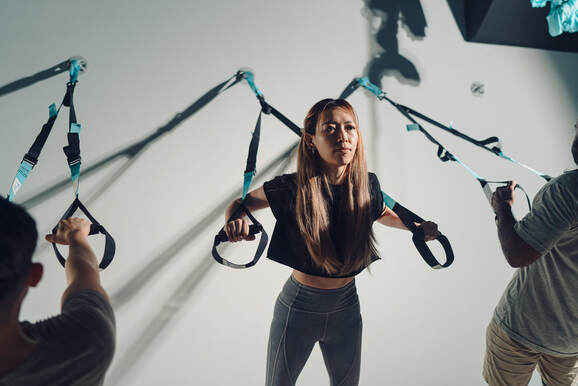
Movement & Sports Medicine Centre (MSMC) has been helping people move better since 2019, & helping women over 50 get strong without putting their bones at risk is a big part of what we do. Our coaches are sports medicine trained, & every plan starts with a full assessment. We test, we don't guess: we look at your strength, balance, posture & how you move, then build a plan that loads your bones safely & progresses at your pace.
We work alongside physiotherapists & doctors, & we'll tell you if you should see one first. Our private studio is at 151A Kitchener Road, a short walk from Farrer Park MRT, so you can train in a calm space without a crowd.
| MSMC option | Price |
|---|---|
| Full assessment (everyone starts here) | $190 |
| 10-session PT package | $1,500 ($150 a session) |
| PT memberships (8, 12 or 20 sessions a month) | $1,080 to $2,350 a month ($117.50 to $135 a session) |
| Classes | $45 a class |
MSMC isn't GST-registered, so there's no GST on top. See our personal trainer Singapore price guide for how this compares.
Frequently asked questions
What is the best exercise for osteoporosis?
A mix of different types of exercise works best: strength training for the hips, legs & back, weight-bearing activity like walking at a good pace, some light impact if it's safe for you, & daily balance practice. Strength training is usually the foundation.
Will exercise improve bone density?
Exercise can help slow bone loss, & in some people it can improve bone density a little & make bones stronger, especially alongside medication. Just as importantly, it builds muscle strength & balance, which lowers your chance of falling. Results vary from person to person.
Should I lift weights if I have osteoporosis?
For most people, yes, when you learn good form & build the load gradually. Lifting with a straight back & hinging from the hips is key. Start with an assessment, & check with your doctor if you've had a recent fracture.
What exercises should be avoided with osteoporosis?
It's wise to avoid exercises that round or twist the spine under load, such as sit-ups, crunches & toe touches, which put pressure on the spine. High impact moves you're not ready for & anything that risks a fall are also worth avoiding until you've built up.
Is walking enough for osteoporosis?
Walking is a great way to stay active & good for your heart, but on its own it usually isn't enough to load your bones. Adding strength training & balance work makes a bigger difference.
Is jumping good for osteoporosis?
Small amounts of light impact, like heel drops or small hops, can help some people's bones. But it isn't right for everyone, especially after a fracture in the spine or with very low bone density, so get checked before adding it.
What should I eat for bone health?
Calcium-rich foods such as dairy, calcium-set tofu, sardines & leafy greens, enough protein & enough vitamin D. Your doctor or a dietitian can tell you if you need supplements.
Last updated: 21 November 2026. Written by the MSMC team & reviewed by a sports medicine trained trainer.
Start building bone strength & bone health
If you've been told you have osteoporosis or osteopenia & you're not sure what's safe, start with a full assessment. We'll check your strength, balance & posture, talk through your goals & show you what your plan would look like, with no pressure to sign up.
Book your assessment on WhatsApp Call or WhatsApp +65 8973 7619