
A safe 6-week plan of lower back rehab exercises starts gently, with walking & easy mobility in weeks 1 to 2, builds core & hip strength in weeks 3 to 4, & adds everyday lifting, carrying & bending in weeks 5 to 6. You move on only when the last stage feels easy & your back settles by the next morning. At MSMC (Movement & Sports Medicine Centre) on Kitchener Road, near Farrer Park MRT, our sports medicine trained trainers start with a full assessment, so the plan fits your back rather than a template.
This guide is for adults in Singapore with everyday lower back pain or stiffness who want to get moving again. The plan was developed from NHS & NICE advice on exercise for back pain. This content is general information, not a prescription. If you have any of the warning signs below, see a doctor first.
Key facts: lower back rehab at a glance
- What it is: a step-by-step plan of gentle movement, core exercises & strength work to help your back cope with daily life again.
- Who it's for: adults with non-specific lower back pain (back pain without a serious cause), often after sitting, lifting or a flare-up.
- How long: this plan runs over 6 weeks as a guide. Everyone recovers at a different pace, so some people need longer.
- What the evidence says: staying active & doing exercise is a main treatment for lower back pain (NICE guideline NG59; NHS).
- Not for: anyone with red flag symptoms (see below). See a doctor first.
- At MSMC: full assessment $190 (as of November 2026), then a plan adjusted to what we find. 151A Kitchener Road #02, Singapore 208526, near Farrer Park MRT. Appointment based, closed Sundays & public holidays.
- How to book: on Momence or WhatsApp +65 8973 7619.
When should you see a doctor before starting back exercises?
Most lower back pain, including painful muscle spasms, is not caused by anything serious & often gets better within weeks with gentle movement. But some signs need a doctor before any exercise plan. See a doctor first, & seek medical attention at A&E straight away for the first three, if you have back pain with:
- numbness or tingling around your genitals or bottom (the "saddle" area)
- new trouble peeing, or loss of control of your bladder or bowels
- weakness, numbness or tingling in both legs, or a leg that is getting weaker
- fever, or feeling unwell with your back pain
- unexplained weight loss
- pain after a fall or accident
- severe pain at night that doesn't ease when you change position
- a history of cancer, or pain that keeps getting worse over several weeks
The NHS back pain page lists these urgent signs too. We work alongside physiotherapists & doctors, & we'll always point you to them if your back needs medical care first.
What are lower back rehab exercises?
Lower back rehab exercises are simple movements that help a sore back move & take load again. They usually include:
- Mobility exercises that gently move the spine & hips, such as pelvic tilts, knee rolls & cat-cow.
- Core exercises for back pain that train the muscles around your trunk to hold steady, such as the dead bug, bird dog & side plank.
- Hip & leg strength, such as glute bridges & sit-to-stands, because strong hips take strain off the lower back.
- Everyday movement practice, such as hip hinges, lifting & carrying, so your back is ready for real life.
- Walking, which is one of the simplest & safest ways to keep a sore back moving.
No single exercise fixes back pain or will instantly relieve pain. What tends to help is regular, steady practice of targeted exercises: first easing stiff muscles with gentle stretches, then strengthening the deep core & glute muscles so they share the load on your lower spine.
Is it safe to exercise for lower back pain relief?
For most people with everyday back pain, yes. The NHS advises staying as active as you can & carrying on with daily activities, rather than resting in bed for long, because long rest can make back pain last longer. NICE recommends exercise as a first step for managing low back pain.
How much pain is okay? NHS inform suggests rating your pain out of 10 & keeping it between 0 & 5 while you exercise. If it goes higher, do fewer repetitions or make the movement smaller. Mild discomfort that settles by the next morning is usually fine. Sharp pain, pain that spreads down your leg, or new numbness means stop & get it checked.
Two more simple rules: breathe normally & don't hold your breath, & if you sit for long hours at work, get up & move for a minute or two every hour. Gentle, low-impact activity like walking, swimming or a stationary bike keeps you moving without the strain of high-impact exercise.
What does a safe 6-week lower back rehab plan look like?
Here is the plan at a glance. Treat the weeks as a rough guide, not a deadline. If a stage still feels hard, stay there for another week.
| Weeks | Goal | Example exercises | How often | Ready to move on when |
|---|---|---|---|---|
| 1 to 2: Calm & move | Ease stiffness, keep moving, build trust in your back | Walking, pelvic tilts, knee rolls, knee-to-chest, cat-cow, child's pose, small glute bridge | Short sessions most days, 10 to 15 minutes, plus daily walks | You can walk 20 to 30 minutes & do the moves with little pain |
| 3 to 4: Build strength | Strengthen your core & hips | Dead bug, bird dog, glute bridge, side plank on knees, sit-to-stand | 3 sessions a week, 20 to 30 minutes, keep walking | You can hold good form for 2 to 3 sets & your back settles by morning |
| 5 to 6: Back to real life | Bend, lift & carry with confidence | Hip hinge, light deadlift or kettlebell lift, suitcase carry, split squat, longer side plank | 3 sessions a week, 30 to 40 minutes | Daily tasks feel normal & you're ready for a longer-term strength routine |
This is a general plan, not a prescription. Your plan should be adjusted after an assessment, especially if your pain goes down your leg, if you've had back surgery, or if certain movements always bring your pain on.
Weeks 1 to 2: which gentle back exercises help a sore lower back?
The following exercises aim to calm things down, alleviate pain & get you moving, not to push. Move slowly, breathe normally & stay in a range that feels comfortable. If a movement is new to you, start with just 2 to 3 repetitions & add 1 or 2 every few days as it gets easier. Hold stretches for 20 to 30 seconds if you can, & aim to do your stretches 2 to 3 times a day.
Is walking a good place to start?
Yes. Start with what's comfortable, even 5 to 10 minutes, a few times a day, & build up a little each day. Walking on flat ground is a gentle way to keep your whole body moving & is good for general fitness too.
How do you do pelvic tilts, the lower back rotational stretch & knee to chest stretches?
- Pelvic tilts: for the starting position, lie on your back with your knees bent, feet flat on the floor & hip width apart. Gently tighten your abdominal muscles & flatten your lower back into the floor, then let it arch a little before returning to a neutral position. Repeat 10 times, slowly.
- Knee rolls (lower back rotational stretch): lie on your back with your knees bent & together, feet flat on the floor & arms extended out to the sides. Keeping your shoulders flat on the floor, let both knees roll slowly to one side, then to the opposite side. This gentle rotational stretch helps spinal mobility & can relieve tension. Repeat 8 to 10 times each side.
- Knee-to-chest (knee hug): lying on your back with bent knees, gently bring your right knee towards your chest with both hands, keeping the left foot flat. Hold for about 5 seconds at first, building up to 20 to 30 seconds, then swap to the left leg. Repeat 2 to 3 times each side.
Which stretches help the back & hips in weeks 1 to 2?
- Cat-cow: on hands & knees, with your hands under your shoulders, slowly round your back up & let your head drop, then let your back sink a little & look forward. Repeat 8 to 10 times.
- Kneeling hip flexor stretch: kneel on one knee on a cushion, with the other foot flat in front. Keeping your back upright & your abdominal muscles gently tight, shift your hips forward until you feel a stretch at the front of the hip. Hold 20 to 30 seconds, then switch legs. Many people who sit for long hours find hip flexor stretches help their lower back feel looser.
- Child's pose (bottom to heels): from hands & knees, sit your bottom back towards your heels with your arms stretched forward. Hold for 3 to 5 slow breaths.
Which gentle strengthening exercises, like the glute bridge exercise, can you start straight away?
- Small glute bridge: lie on your back with your knees bent, feet flat on the floor & hip width apart, arms by your sides. Squeeze your gluteal muscles (buttocks) & slowly lift your hips a few centimetres off the floor, keeping your shoulders down. As you progress, lift until your shoulders, hips & knees form a straight line. Repeat 8 to 10 times. This bridge exercise works the abdominal and gluteal muscles together & strengthens the gluteus maximus, the big buttock muscle, so your lower back doesn't have to do the work on its own.
- Back extension (lying on your stomach): lie on your stomach with your elbows under your shoulders & gently push up onto your forearms, keeping your hips on the floor. Hold for 5 to 10 seconds, then lower. Repeat 5 to 8 times. Some people find this eases their pain & some don't, so skip it if it makes your symptoms worse.
Tight hamstrings, the muscles at the back of the thigh, can add to stiffness in the lower back. A gentle hamstring stretch helps:
- Hamstring stretch: lie on your back, hold behind one thigh with both hands & gently straighten the knee until you feel a stretch. Hold for 20 to 30 seconds, then swap. Repeat 2 to 3 times each side.
If you've found a stretch that helps, keep it in your routine every day. The NHS exercises for back pain page shows several of these with pictures. If a stretch makes your symptoms worse rather than easing them, stop & speak to a healthcare professional.
Weeks 3 to 4: what are the best core exercises for back pain if you want to build strength?
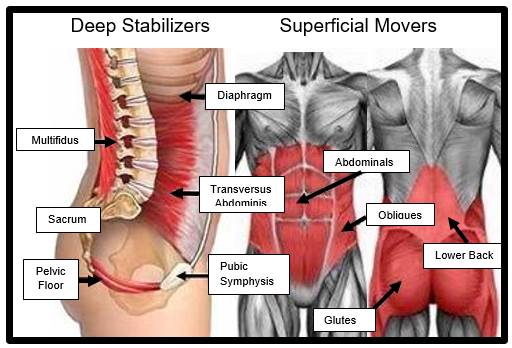
Once gentle movement feels easy, start building strength. The core isn't just your six-pack or the front of your stomach. It's the core muscles all around your trunk & hips, including the deep abdominal muscles & back muscles, that give your lumbar spine stability & support you when you move. Building core stability & core strength helps with spinal stability. Keep the number of repetitions small at first.
- Dead bug: lie on your back, arms up towards the ceiling, knees bent over your hips. Gently draw your belly button in, then slowly lower one arm & the opposite leg at the same time while keeping your lower back still. 6 to 8 each side, 2 to 3 sets.
- Bird dog: on hands & knees with your back in a neutral position, slowly lift one arm forward & the opposite leg back until they form a straight line with your body, keeping your hips level. Hold 3 seconds, return to the starting position & switch to the opposite side. 6 to 8 each side.
- Glute bridge: now lift higher, hold for 2 to 3 seconds at the top. 10 to 12 reps, 2 to 3 sets.
- Side plank on knees: lie on your side, prop up on your elbow & lift your hips. Hold 10 to 20 seconds each side.
- Sit-to-stand: stand up from a chair & sit back down slowly, without using your hands if you can. 8 to 12 reps.
Quality matters more than quantity. Build up slowly, adding a few repetitions each week, towards 2 sets of 10 to 15. If your form slips or your pain goes up, do fewer reps. Overall, your exercises shouldn't make your back pain worse from one week to the next.
Weeks 5 to 6: how do you get the back ready for lifting & bending?
Many people are scared to bend after back pain. But your back is built to bend & lift. This stage helps you practise those movements in a steady, controlled way so daily life, like lifting a bag of groceries or a grandchild, feels normal again.
- Hip hinge: from a standing position with your feet shoulder width apart, soften your knees & push your hips back as you lean your upper body forward, then stand up by squeezing your buttocks. Start with a broomstick along your back to feel the movement.
- Light lift from a raised surface: lift a light kettlebell or bag from a step or box using the hip hinge. Lower the height slowly over the weeks.
- Suitcase carry: carry a weight in one hand & walk tall for 20 to 30 metres. Swap hands.
- Split squat: one foot forward, one back, lower gently & stand up. 6 to 10 each leg.
- Side plank: move from knees to feet when you're ready.
Moving more can help your mood too: the WHO notes that regular physical activity can reduce symptoms of anxiety & depression, which often come along with long-lasting back pain.
After week 6, keep going. A large review of studies found that exercise, alone or with education, lowered the chance of a new episode of lower back pain (Steffens et al., JAMA Internal Medicine, 2016). The WHO recommends adults do muscle-strengthening activity on 2 or more days a week, alongside regular moderate activity.
What daily habits help protect the back?
Exercise is only one part of looking after your back. A few simple tips for the rest of the day:
- Break up sitting: stand up, walk or stretch for a minute or two every hour, especially at a desk.
- Lift close to your body: bend at your hips & knees, keep the load close & avoid twisting while you lift.
- Keep moving even on bad days: a short walk is usually better than a whole day in bed. It is a good idea to keep a little of your routine going, even if you do less.
- Manage stress & sleep: stress & poor sleep can make pain feel worse, so slow breathing & a regular bedtime can help.
- Set up your space: a chair that supports your lower back & a screen at eye level can make long workdays easier & save your neck too.
- Don't worry too much about "bad posture": there's no single perfect or "proper posture". Changing position often & staying comfortable usually matters more than sitting perfectly straight.
Is yoga or pilates good for lower back pain?
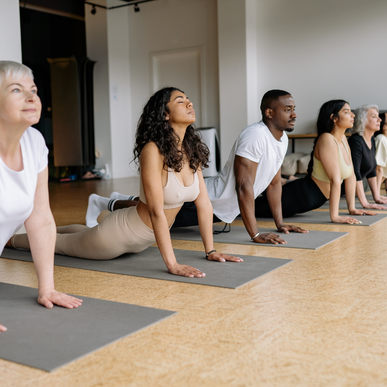
They can be. The NHS says activities like walking, swimming, yoga & pilates may help ease back pain. Choose a gentle, beginner-level class, tell the teacher about your back, & skip any pose that brings on sharp pain. At MSMC, our small stretch classes, such as Bandit Stretch Class, work in a similarly gentle way.
I have knee pain too: can I still do these lower back exercises?
Usually yes, with a few changes. Use a cushion under your knees for moves on hands & knees, keep sit-to-stands & split squats within a comfortable range, & skip any exercise that makes your knee pain worse. Our guide to knee rehab after a sports injury has knee-friendly options.
What is the best sleeping position for lower back pain?
There's no single best position, but many people find it more comfortable to sleep on their side with a pillow between their knees, or on their back with a pillow under their knees. Try a pillow under your head that keeps your neck level. If you wake up very stiff, a few gentle knee rolls in bed before you get up can help.
Which exercises for back pain should you avoid?
There are no exercises that are banned forever, but some are best left until later in your rehab:
- heavy lifting or fast, jerky twisting while your back is still sore
- full sit-ups & crunches, which many people find aggravating early on
- long, deep forward stretches held for a long time when your back is flared up
- high-impact work like jumping or running hills before you can walk comfortably
- any movement that causes sharp pain, or pain, pins & needles or numbness travelling down your leg
The right choice depends on what your back reacts to, which is exactly what an assessment looks at. If you have any concerns about a particular exercise, ask a physiotherapist, therapist or trainer before you try it.
How long does lower back rehab take if you stick with it?
It varies a lot. The NHS says back pain usually improves within a few weeks or months. Chronic or persistent pain, meaning pain that has lasted more than 3 months, often takes longer to improve, & usually needs a mix of exercise, pacing & support. Some people feel much better within the 6 weeks, others need longer, especially if their back pain has been coming & going for years. We can't promise a timeline, & no honest trainer should. What usually helps is steady practice, building up slowly & not giving up after one bad day. Small improvements, like sitting for longer or bending to put on your socks more easily, are a good sign you're on the right track.
How do you know if back pain is serious?
Most back problems are not serious, but the red flags listed above are the signs to take seriously. Also see a doctor or GP if your pain hasn't started to improve after a few weeks, if it keeps getting worse, or if it stops you doing normal daily activities. A healthcare professional can then advise on the next step.
Is back rehab with a trainer different from physiotherapy or other back pain treatment?
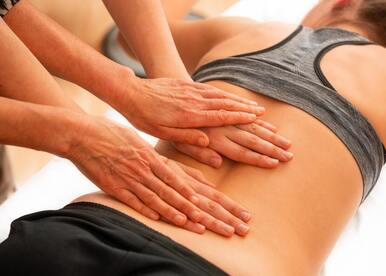
They work well together. A physiotherapist (physical therapist) assesses & treats injuries & pain, & can give you a treatment plan with a personal exercise programme, pain management advice & the confidence to move again. A sports medicine trained trainer helps you build strength & confidence through exercise, often once the early, painful stage has settled, or alongside physio care. In Singapore, many people see a physio for treatment & a trainer for the longer strength work.
| Doing it on your own | Physiotherapist | Sports medicine trained trainer (MSMC) | |
|---|---|---|---|
| Best for | Mild, everyday back stiffness with no red flags | New injuries, severe pain, nerve symptoms, after surgery | Building strength & confidence, pain that keeps coming back, moving on from physio |
| Diagnosis | No | Assesses & treats injuries | No. We test how you move & refer to doctors or physios when needed |
| Exercise plan | General, like this guide | Rehab exercises, often a short home programme | A progressive plan adjusted after a full assessment, with sessions to check form |
| Cost | Free | Varies by clinic | Full assessment $190 (as of November 2026) |
Whichever type of help you choose, it's a good idea to share this plan with your doctor or physiotherapist so they can tell you what suits you. If you're not sure which to start with, read how a personal trainer can help with lower back pain. If your pain travels down the leg, it may involve irritation of the sciatic nerve; our guide to what sciatica is & how it's treated explains more.
How does MSMC help with back rehabilitation in Singapore?
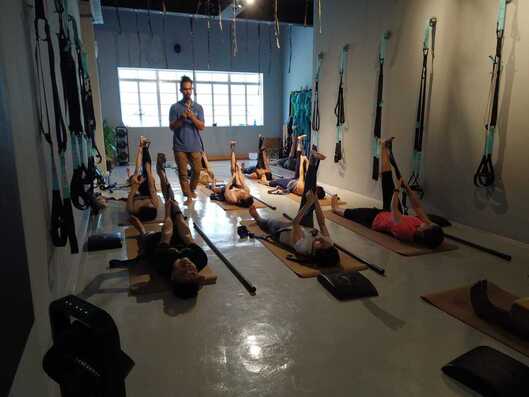
At MSMC, our motto is "we test, we don't guess". Your first step is a full assessment ($190, as of November 2026). A sports medicine trained trainer looks at how you move, bend, lift & balance, which movements bring on your pain & which ones feel fine. From there, we build a plan like the one above, adjusted to you.
Many of the people we see are adults aged 35 to their 60s whose back pain hasn't fully settled with physio, chiro, TCM or a regular gym. Since 2019, we've helped hundreds of people move with more confidence. We work alongside physiotherapists & doctors & we don't diagnose, so if anything in your assessment needs medical care, we'll tell you.
After the assessment, you can carry on with personal training, or join small classes such as Deep Roll 2.0 (foam rolling & release) or Bandit Stretch Class, with a maximum of 6 people. Classes are $45 for 55 minutes. You can see all our services & prices on our website, in our personal training rates in Singapore guide. If you also have sore knees, see our guide to knee rehab after a sports injury.
Lower back rehab FAQs
What is the best exercise for lower back pain?
There isn't one best exercise for pain relief. Walking, gentle mobility, core exercises like the bird dog & dead bug, & hip strength work like glute bridges are a good start. The best plan is the one that suits your back & that you'll do regularly.
How often should I do lower back rehab exercises?
In the early weeks, gentle mobility & walking can be done most days, often 3 to 5 days a week or more. Strength exercises are usually done 2 to 3 times a week, with a rest day in between. Even after your back feels better, aim to keep doing back & core exercises at least twice a week.
Should I rest or exercise with lower back pain?
For most everyday back pain, gentle activity is better than bed rest. A day or two of taking it easier is fine, but long rest tends to make backs stiffer & weaker. If you have red flag signs, see a doctor first.
Is walking good for lower back pain?
For most people, yes. Walking keeps your back moving & is easy to build up. Start with short walks & add a few minutes as it feels comfortable.
Can I do core exercises with a slipped disc?
Many people with a disc problem do well with a carefully chosen exercise plan, but it depends on your symptoms. If you experience pain, numbness or weakness down your leg, get checked by a doctor or physiotherapist first, then have your plan adjusted after an assessment.
When should I see a doctor for back pain?
See a doctor or GP first if you have numbness around your genitals or bottom, bladder or bowel changes, weakness in your legs, fever, unexplained weight loss, pain after a fall, or severe pain at night. Go to A&E straight away for the first three. Also see a doctor if your pain isn't improving after a few weeks, or if you're worried.
Will my back pain come back after rehab?
It can, because back pain often comes & goes. Keeping up strength training & staying active after your rehab is one of the best ways to lower the chance & to handle a flare-up calmly if it happens.
Last updated: 21 November 2026. Written by the MSMC team & reviewed by a sports medicine trained trainer.
If your back has been holding you back, start with a full assessment ($190, as of November 2026) at MSMC, 151A Kitchener Road #02, near Farrer Park MRT. Book on Momence or WhatsApp us on +65 8973 7619, & we'll take it one step at a time with you.