
How to choose a personal trainer in Singapore? Look past the gym's look & the trainer's own body. Ask what they're qualified in, whether they start with a proper assessment, whether they've helped people like you (your age, your pain, your goal) & how they'll measure your progress, then check the full price before you pay. At MSMC (Movement & Sports Medicine Centre) on Kitchener Road, near Farrer Park MRT, every new client starts with a full assessment, because our motto is "we test, we don't guess".
This guide shows you how to choose the right personal trainer step by step, wherever you are on your fitness journey: the 10 questions to ask any personal trainer before you sign up, the red flags to walk away from, & what personal training costs in Singapore. It's written for adults, often 35 to 60s, who want to get stronger, move better or train around pain.
Key facts: choosing a personal trainer in Singapore
- What matters most: recognised certifications (ideally NREP-registered), an assessment before training, experience with people like you, a clear plan & honest pricing.
- Who this guide is for: adults looking for a personal trainer in Singapore, including people with back, knee, hip or shoulder pain.
- MSMC's first step: a full assessment, $190 (as of November 2026).
- MSMC personal training: Essential $1,080 (8 sessions a month), Lifestyle PT $1,500 (12), ELITE PT $2,350 (20), or a 10-session package for $1,500 (as of November 2026).
- Who trains you: sports medicine trained (SMT) trainers, working alongside physiotherapists where needed.
- Where: 151A Kitchener Road #02, Singapore 208526, a short walk from Farrer Park MRT.
- How to book: appointment based, closed Sundays & public holidays. Book on Momence or WhatsApp +65 8973 7619.

How do I choose a personal trainer?
Knowing how to choose a personal trainer starts with your fitness goals & your body, not the trainer's Instagram. A good personal trainer or fitness coach for you is someone who understands what you want (strength, less pain, better balance, weight loss, sport) & has the knowledge to get you there safely. In practice, that comes down to five things:
- Qualifications & training that match your needs.
- An assessment first, so the plan is built on how you actually move.
- Experience with people like you, for example adults over 50 or people with back pain.
- A clear training programme with fitness goals you can measure & check.
- Honest, upfront pricing with no pressure to sign on the spot.
Choosing the right personal trainer matters because a wrong choice can cost you money, time & sometimes an injury. The 10 questions below help you test each of these in a short chat or a first meeting.
Do I need a personal trainer, & is it worth paying for one?
You don't need a personal trainer to get fitter. Many people do well on their own. A personal trainer is usually worth it if:
- You have pain, stiffness or an old injury & aren't sure whether certain exercises are safe.
- You want built in accountability: booked sessions make you far more likely to turn up.
- You've tried training alone but lost motivation or stopped seeing progress.
- You're new to the gym & want to learn good technique from the start.
- You have a clear goal, such as weight loss, a sport, or getting strong enough to play with your grandchildren, & want a plan to get there.
It's less likely to be worth it if the trainer gives you the same workout they give everyone, or if you can't keep up the training sessions because of cost or travel. Think about your fitness level, your fitness goals, your lifestyle & what you can afford over several months, not just the first few weeks. Personal training at home adds convenience, though you'll usually have less equipment than in a gym or studio. Many people who stick with personal training find newfound confidence in the gym as they get stronger.
What questions should I ask a personal trainer before I pay?
1. What qualifications do you have?
Not all personal trainers have the same level of training, & it varies a lot in Singapore. Ask which certification they hold, who it's from & whether it's current, such as ACE (American Council on Exercise), NASM (National Academy of Sports Medicine) or NSCA. Ask too whether they're on Sport Singapore's National Registry of Exercise Professionals (NREP). Look for a recognised fitness certification & up-to-date first aid with CPR & AED. If you have pain, an injury or a health condition, ask what extra training they have in that area, such as sports medicine, rehab or exercise for older adults. A weekend course alone is not enough to train someone with a bad back.
2. Do you start with an assessment?
A good trainer tests before they train. That might include your movement patterns: how you squat, bend, balance & reach, how your joints move, your strength on each side & your health history. Without this, the plan is a guess. At MSMC the full assessment ($190) is the first step for personal training & for anyone with pain, & the results shape every session that follows.
3. Have you worked with clients similar to me?
Ask about clients with your age, goals or problem. A trainer who mostly coaches competitive bodybuilding may not be the right fit for a 55-year-old with stiff hips. Ask for a simple example of how they'd adapt a session for someone like you. The right trainer for you has usually helped people in your situation before.
4. How will you measure progress towards my fitness goals?
Look for a trainer who retests, uses regular check-ins to track progress & is able to show you your progress in numbers: strength, range of movement, balance, pain levels or how easily you climb stairs. "You'll feel better" is not a plan. Ask how often they'll check & what they'll change if things aren't moving.
5. What will the first session & a typical session look like?
Ask how long a session is, how it starts (a warm-up or mobility work), what the main part is (strength, conditioning, technique) & how it ends. A well-planned, effective training session has a reason for every exercise, using an evidence based approach rather than fashion, & the plan should fit your individual needs & goals rather than a standard workout. Ask whether they write bespoke programmes or use the same template for everyone. A holistic, comprehensive approach looks at sleep, stress, food & daily movement as well as the gym, or points you to someone who can help with those.
6. What happens if an exercise hurts?
This is one of the most useful questions. A good answer sounds like: "We change the exercise, the range or the load, & we keep track of it." A worrying answer is "push through it". Training shouldn't make pain steadily worse.
7. Do you work with physios or doctors?
Trainers don't diagnose. If you have pain that hasn't settled, an injury or a medical condition, a good trainer knows when to refer you on & is happy to work alongside your physiotherapist, doctor or other medical professionals. At MSMC our trainers work alongside physiotherapists & will tell you honestly if you need to see someone else first.
8. What's the full cost, & what's included?
A professional personal trainer will be open about money. Ask for the price per session, the package options, how long a package lasts, & the rules for cancelling or moving a session. Check whether the assessment is included or separate, & whether you also need a gym membership. You should get clear answers in writing before you pay.
9. Where & when can I train around a busy lifestyle?
The best plan only works if you can get there. Think about convenience: travel time, opening hours & how easy it is to book. Some trainers come to you at home or train you outdoors, while others work from a gym or studio. A place near your home, office or MRT line makes it far easier to keep going.
10. Can I see how you work before I commit?
Read their Google reviews, & watch any videos they share on YouTube or social media to see how they coach. Ask to see client testimonials or a sample of their programme. In a first meeting, ask about their training philosophy & training style, & notice their communication style: a good coach listens & explains, rather than just selling. Clear communication matters, because you need to be able to say when something hurts. You should feel comfortable asking questions.
What types of personal training are there in Singapore?
Personal trainers in Singapore offer several kinds of personal training services. Knowing the options helps you pick the one that suits your budget, schedule & personal goals.
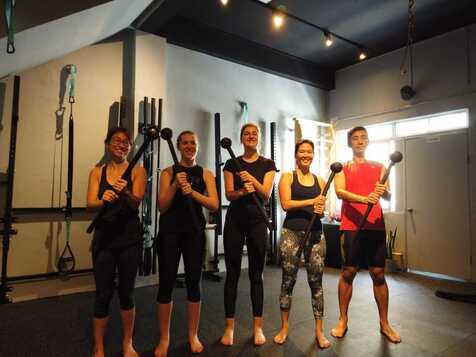
One-to-one personal training
Just you & a private personal trainer. Every personal training session is built around you, so it suits people with pain, injuries or very specific goals. It costs the most, but it's the most adaptable training.
Buddy training & small groups
Buddy training means sharing a trainer with a friend or partner. Small group training works the same way with a few more people. You split the cost & get some social support, but less individual attention. It works best when your goals & fitness level are similar.
Mobile & home personal training
With mobile or home personal training, a home personal trainer comes to your own home or condo gym. It's convenient, but you'll usually have less equipment, & the trainer's travel time is often built into the price.
Personal training gym or studio
A personal training gym or private studio has the equipment & space in one place. Studios tend to be quieter than a big gym & are usually appointment based, which many people find a calmer fitness experience. Some trainers in big gyms are part of a wider fitness community, which some people enjoy.
Online coaching
Online coaching is cheaper & flexible, but it can't give constant support in person, & no one can correct your proper form face to face, so many people prefer real coaching in person. It suits people with some experience who are pain free.
What qualifications should a personal trainer have in Singapore?
A good benchmark is what Sport Singapore asks of trainers on the NREP: a relevant fitness or exercise certification, valid Standard First Aid (with CPR & AED), Safe Sport certification & a code of ethics. From 1 June 2026, NREP-registered exercise professionals also need a Basic Exercise Science (BES) certification or equivalent. Beyond that, what matters is the match between their training & your needs:
- General fitness goals: a solid personal trainer qualification & good coaching experience.
- Pain, old injuries or stiffness: extra training in sports medicine, injury rehab or corrective exercise.
- Over 50s or health conditions: experience with older adults & knowing when to refer to a doctor or physio.
Our trainers are sports medicine trained (SMT). You can read more about what that means in our guide to sports medicine trainers.
Gym trainer, freelance trainer or sports medicine trainer: which is right for me?
Different trainers suit different people. Here's a simple way to compare them:
| What you get | Big gym trainer | Freelance trainer | Sports medicine trained studio (like MSMC) |
|---|---|---|---|
| Assessment before training | Varies; often a short fitness check | Varies by trainer | Full assessment first ($190 at MSMC) |
| Training around pain or injury | Varies | Varies | A main focus; works alongside physiotherapists |
| Setting | Busy gym floor | Gym, park, condo gym or at home | Quieter, appointment-based space |
| Best for | People who want gym access & general fitness | People who want flexible locations | Adults 35 to 60s with pain, stiffness or who want to train safely |
| What to check | Membership rules & package terms | Insurance, qualifications & cancellation rules | Fit with your goals & schedule |
For a longer look at this choice, see sports medicine gym vs commercial gym.
How do I find a personal trainer for back pain?
Back pain is very common: up to 80% of people in Singapore have low back pain at some point, & most cases aren't serious (HealthHub). Exercise is one of the main recommended treatments, & most people with back pain are advised to stay active rather than rest (NHS). The right exercise, at the right dose, matters though. When looking for a personal trainer for back pain, ask:
- Will you assess how I bend, lift & move before we start?
- How will you build up the load without flaring my back?
- Will you work with my physio or doctor if needed?
- What will you do if my pain gets worse?
See a doctor first if your back pain came after a fall or injury, or comes with numbness around your bottom or genitals, changes in bladder or bowel control, weakness in your legs, fever, unexplained weight loss, or severe pain at night. These need medical checks before any training.
Our guides on lower back pain & personal training & whether a personal trainer can help with pain go into more detail.
Can a personal trainer help with fat loss, or help you lose weight & build muscle?
Yes, a good fitness trainer can help with weight loss, fat loss, muscle gain or body recomposition (improving body composition by losing body fat while building lean muscle mass). A good personal trainer may track body fat percentage, measurements or strength, but how you feel & move matters as much. What matters is a plan you can keep up:
- Strength training & weight training are the core of muscle building, & keeping lean muscle helps with fat loss & overall fitness.
- Nutritional guidance: many trainers give simple, general advice on food. Detailed meal plans, or advice for a medical condition, should come from a dietitian or doctor.
- Sustainable changes towards a healthier lifestyle, such as sleep, daily steps & regular meals usually make all the difference over time.
Be careful with anyone who promises your "dream body" or "optimal results" in a few weeks. If you want to lose weight safely, expect steady progress, not quick fixes.
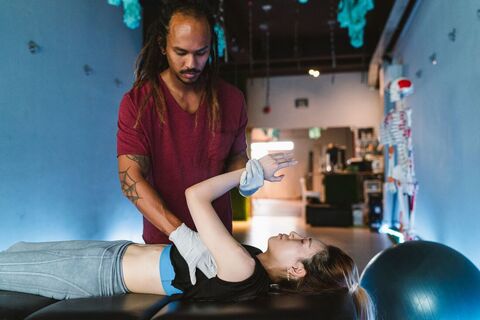
What does a good fitness assessment include?
A fitness assessment is how a knowledgeable trainer learns where you're starting from. A thorough one usually covers:
- Your health & medical history, past injuries & any medication.
- Your personal goals, fitness goals & past fitness experience, including what you've tried before.
- Body composition, if it matters for your goals, measured the same way each time.
- How you move: squatting, bending, reaching & balancing.
- Strength & joint range on each side of the body.
- A plan for how & when you'll be retested.
At MSMC this is the full assessment ($190), & it shapes your training programme from the first session.
Do I need a trainer who specialises in injuries or sport?
If you have a specific need, look for experienced personal trainers with extra training in that area:
- Injury management & pain: a trainer with sports medicine or rehab training, who works alongside physiotherapists & doctors.
- Post-natal training: a trainer with specific post-natal training, ideally guided by your doctor or a women's health physiotherapist.
- Sports performance: a strength coach who understands your sport.
- Over 50s: a trainer who knows how to use strength training to build strength & balance safely as you age.
Certified personal trainers often hold extra qualifications for these areas, so ask to see them.
What are the red flags when choosing a personal trainer?
Walk away, or at least slow down, if a trainer:
- Skips any kind of assessment or health questions.
- Promises unrealistic results in a short time, like "lose 10kg in a month", or guarantees results at all.
- Tells you to "push through" sharp or worsening pain.
- Diagnoses your pain or tells you to ignore your doctor.
- Pushes you to sign a big package on the spot, or won't give prices in writing.
- Sells supplements as the main answer.
- Gives everyone the same workout.
How much does a personal trainer cost in Singapore?
Personal trainer cost in Singapore varies with the trainer's experience, the setting & how many sessions you buy. Affordability matters: a plan you can keep up for several months usually does more than an expensive few weeks. Packages usually work out cheaper per session than one-off sessions. When you compare, look at what's included (assessment, programme, check-ins) rather than the price per session alone.
At MSMC, as of November 2026:
| MSMC option | Sessions | Price |
|---|---|---|
| Full assessment (first step) | 1 | $190 |
| Essential PT | 8 a month | $1,080 a month |
| Lifestyle PT | 12 a month | $1,500 a month |
| ELITE PT | 20 a month | $2,350 a month |
| 10-session PT package | 10 | $1,500 |
For a full breakdown, see our personal training rates in Singapore.
How much should you pay for a personal trainer?
Pay for what you get, not the session price alone. A fair price covers a qualified trainer, an assessment, a written plan & regular retests; a cheap package with none of those often costs more in the end. Set a monthly budget you can keep for at least three months, because consistency matters more than any single session.
Is $300 a month a lot for a personal trainer?
For one-to-one personal training in Singapore, $300 a month usually covers only a few sessions with a qualified trainer, so it's on the low side. It can go further with small-group classes or a programme you follow on your own. At MSMC, $300 a month is our Pro small-group class membership (12 classes), not one-to-one PT.
How often should I train with a personal trainer?
Singapore's physical activity guidelines suggest adults do muscle-strengthening activities on at least two days a week, alongside 150 to 300 minutes of moderate activity (HealthHub; WHO). Many people train with a personal trainer twice a week & do a little on their own in between. If you're starting out or coming back from pain, two personal training sessions a week, with strength training at the heart of each, is often a good balance of progress & recovery. Between sessions, a short workout at home keeps your fitness routine going. Your goals shape the plan too: weight loss, building strength & easing pain each need a slightly different mix of personal training, fitness work & rest.
How do I start my fitness journey with a personal trainer?
- Write down your fitness goals, such as less back pain, more strength or better balance, & how many workouts a week you can realistically fit in.
- Shortlist two or three trainers & ask each potential trainer the 10 questions above.
- Book a fitness assessment before you commit to more sessions.
- Start with a short block, such as a 10-session package, so you can see how you get on.
- Review after four to six weeks. Most clients benefit from checking progress with their trainer & adjusting the plan.
Expert guidance at the start makes training safer, but the long-term aim is sustainable habits you keep for your overall health & overall well being. If you've started training after an injury or a difficult period in your life, a calm, patient trainer can make each session enjoyable & easier to keep coming back to.
Built in accountability: why a fitness coach helps you stick with it
One underrated benefit of a good fitness coach is built in accountability: a booked session & regular check ins make it much harder to skip a workout. Look for a trainer who listens, explains the plan with clear communication & has a communication style that suits you, whether that's calm & detailed or short & direct. That's what keeps a fitness journey going after the first few weeks.
How does personal training at MSMC work?
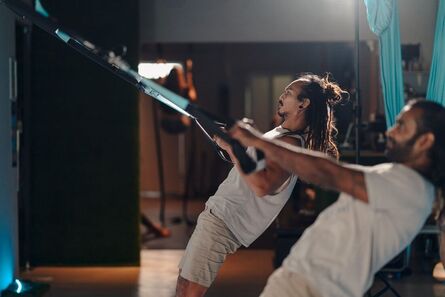
- Full assessment ($190). We look at your history, goals, how you move, your strength & your balance.
- A clear plan. A personalised training programme, so you know what we're working on & why.
- Personalised training sessions, one-to-one with a sports medicine trained trainer, adjusted as you go.
- Retesting, so you can see what's changed.
Many of the people we see come to us after physio, chiro, TCM or a regular trainer hasn't fully fixed their pain or stiffness. We've helped hundreds of people since we opened in 2019. If you're comparing options, our guide to the best personal trainers in Singapore for strength explains what to look for in more depth. If you're over 50, read strength training in your 60s.
Frequently asked questions
How do you know if a personal trainer is good?
When you're working out how to choose a personal trainer, look for a recognised qualification, an assessment before you start, experience with people like you, a clear way to measure progress & honest pricing. You should also feel listened to: a good trainer listens before they plan.
Is a personal trainer worth it if I have back pain?
It can be, if the trainer assesses you first, builds up slowly & works alongside your physio or doctor. Exercise is a common recommendation for back pain, but red flag symptoms need a doctor first.
How do I know if a personal trainer is qualified?
Ask which certification they hold, who issued it & whether it's current, plus first aid with CPR & AED. You can also ask if they're registered with NREP. For pain or injury, ask about extra training in sports medicine or rehab.
How much does it cost to hire a personal trainer in Singapore?
It varies by trainer & package. At MSMC, PT starts at $1,080 a month for 8 sessions, or $1,500 for a 10-session package, after a $190 assessment (as of November 2026).
How many sessions a week do I need?
Two sessions a week suits most people starting out, in line with the advice to do strength work at least two days a week.
Can a personal trainer diagnose my pain?
No. Trainers don't diagnose. A good trainer assesses how you move & refers you to a doctor or physiotherapist when needed.
Is the best personal trainer in Singapore the most expensive one?
Not always. The best personal trainer for you is the one whose skills match your goals & your body. Compare what's included, not just the price.
Last updated: 21 November 2026. Written by the MSMC team & reviewed by a sports medicine trained trainer.
Ready to start?
Now you know how to choose a personal trainer, the next step is simple. If you'd like a trainer who tests before they train, book your full assessment ($190) at MSMC, 151A Kitchener Road, near Farrer Park MRT. Book on Momence or message us on WhatsApp at +65 8973 7619. We'll take it one step at a time.