
Strength training for women over 50 is one of the best things you can do for your body, especially around menopause. Lifting weights or using bands two or three days a week helps you keep muscle mass, supports bone density as oestrogen falls & makes everyday life feel easier. At MSMC (Movement & Sports Medicine Centre) on Kitchener Road, near Farrer Park MRT, women in their 50s start with a full assessment, so the plan fits their joints, bones & goals.
This guide explains what menopause does to your muscles & bones, the best exercise for menopause, how heavy to lift & how many reps to do, how to start safely & how to choose a gym or trainer in Singapore.
Key facts: strength training after 50 for women
- What it is: resistance exercise that makes your muscles work against a weight, a band or your own body weight.
- Who it's for: women in their late 40s, 50s & beyond, including those in perimenopause or after menopause, & complete beginners.
- How often: at least two days a week of strength training, as advised by the WHO.
- First step at MSMC: a full assessment, $190 (as of November 2026).
- Classes: $45 per 55-minute class; Barbell Lifting & BFRT have up to 6 people (as of November 2026).
- One-to-one: personal training with sports medicine trained (SMT) trainers, from $1,080 a month for 8 sessions, or $1,500 for 10 sessions (as of November 2026).
- Where: 151A Kitchener Road #02, Singapore 208526, near Farrer Park MRT.
- How to book: appointment based, closed Sundays & public holidays. Book on Momence or WhatsApp +65 8973 7619.
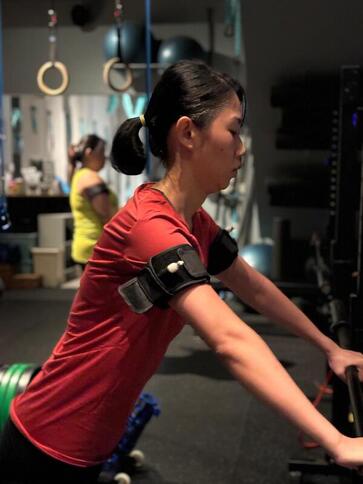
Why do muscle mass & bone density matter for women over 50?
From middle age, we all slowly lose muscle mass, & older adults lose it faster. For women, menopause adds another change: oestrogen (estrogen) levels fall, & oestrogen helps protect bone. Bone loss speeds up in the years after menopause, which raises the risk of osteoporosis & fractures (NHS). Resistance training is one of the few things that works on both muscle loss & decreased bone density at the same time. Keeping muscle mass also protects your joints & balance, so physical activity of all kinds stays easier. That's why strength training for women over 50 is essential to maintain muscle strength, & for longevity & healthy ageing.
What are the key benefits of strength training for menopausal women?
The benefits of strength training (also called resistance training) for menopausal women include:
- Keeping & building muscle mass. Regular strength training exercises support muscle development at any age, so lifting, carrying, climbing stairs & other daily activities stay easy & you maintain independence for longer.
- Supporting bone health. Progressive training can help maintain or improve bone density. Muscle-strengthening & weight-bearing exercise are recommended for bone health (Royal Osteoporosis Society).
- Better balance, posture & endurance, & a lower risk of falls.
- Weight management & body composition. Muscle uses more calories than fat, even at rest, so keeping muscle helps your metabolism & daily calorie burning. That can help with midlife weight gain, alongside food, sleep & activity.
- Heart health & blood sugar. A large review of studies found that 30 to 60 minutes a week of muscle-strengthening activity was linked with a 10 to 20% lower risk of death from any cause, heart disease & cancer, & a lower risk of type 2 diabetes (Momma et al., 2022). Working muscles help your body use blood sugar, which is called insulin sensitivity. That's a link, not a promise, but it shows the importance of strength work for long-term health.
- Mood, sleep quality & emotional well being. Regular exercise is one of the things the NHS suggests to help with menopause symptoms.
Overall, many women find it improves their quality of life: they feel stronger, steadier & more confident in their body.
What hormonal changes happen during menopause?
Menopause & perimenopause usually happen between 45 & 55, though they can start earlier (NHS). Ovarian function slows, & the ovaries make less oestrogen. Declining oestrogen levels are behind many of the changes below. Perimenopause, the years before your periods stop, often starts in your 40s. These hormonal changes affect more than your periods, & they're why menopausal women often notice changes in muscle, fat & bone:
- Symptoms: common menopausal symptoms include hot flushes (also called hot flashes), night sweats, sleep disturbances, low mood, tiredness, joint pain, vaginal dryness & weight gain (NHS).
- Muscle: muscle mass & strength continue their slow decline with age, which can affect your ability to lift, carry & climb.
- Fat: many women notice the body stores more fat around the middle, even when they eat the same way.
- Bone: bone loss speeds up in the first years after menopause.
- Joints: aches & stiffness are common, & a joint or tendon that was quiet may start to complain.
The good news is that research shows muscle mass still responds to resistance training during & after menopause. Postmenopausal women can still get stronger with the right weight training. Strength & power, the force you can produce quickly, also matter for everyday performance, such as catching yourself if you trip, so some exercises like standing up briskly from a chair are worth including.
What is the best exercise for menopause?
There's no single best exercise. A good exercise routine for menopause combines aerobic & strength work, with balance & flexibility exercises too:
| Type of physical activity | Examples | Why it helps | How often |
|---|---|---|---|
| Strength training | Squats, deadlifts, rows, presses, band work | Keeps muscle, supports bones & joints | 2 to 3 days a week |
| Weight-bearing & impact | Brisk walking, stair climbing, small jumps if your bones & joints allow | Loads the bones of the hips & spine | Most days |
| Aerobic exercise | Walking, cycling, swimming | Cardiovascular health, energy & mood | 150 minutes a week of moderate activity in total |
| Balance | Single-leg stands, heel-to-toe walking | Lowers the risk of falls | 2 to 3 days a week |
| Flexibility exercises | Stretch classes, yoga, foam rolling | Eases stiffness & helps you move well | 2 to 3 days a week |
Combined aerobic & strength training gives you the widest range of benefits. Swimming & cycling are good for your heart, but they don't load the bones much, so pair them with strength & weight-bearing activity. Yoga & Pilates are good for mobility, balance & stress, & work well alongside strength training rather than instead of it. If you enjoy yoga, keep it, & add two strength training sessions a week.
Does weight training help with hot flashes & menopausal symptoms?
Exercise plays a useful part in managing menopausal symptoms. It's linked with better mood, sleep quality & wellbeing, & the NHS suggests regular exercise, with a focus on weight-bearing exercise to build strength, as one of the things that can help with symptoms & protect your bones. The evidence that weight training will reduce hot flashes is less clear, so we can't promise that, but many women find they sleep better & feel more like themselves. For menopausal symptoms that affect your daily life, or questions about HRT, speak to your GP. That decision is between you & your doctor.
Can strength training improve bone density & bone health?
It can help. In the LIFTMOR study, postmenopausal women with low bone mass did supervised, progressive heavy resistance & impact training twice a week for 8 months. They improved bone mineral density at the spine & hip, & their physical function, compared with a low-intensity home programme (Watson et al., 2018). Important points from that research: the training was closely supervised, built up gradually & focused on proper form.
To improve bone density, or slow its loss, bone density exercise for women works best when it is:
- Progressive: the load slowly increases over weeks & months.
- Weight-bearing: standing exercises like squats & deadlifts load the hips & spine.
- Regular: two or three sessions a week, kept up long term.
- Supervised if you already have osteoporosis or a past fracture.
Postmenopausal women who've been told they have osteoporosis or osteopenia, or who've had a fracture from a minor fall, should see a doctor first & tell their trainer before they start.
How many repetitions should a woman over 50 do, & how heavy?
Choose a weight where the last two or three reps of a set feel hard while you keep good form. That's the sweet spot. For many beginners, that means 2 sets of 10 to 15 repetitions for each muscle group with body weight, resistance bands or light dumbbells. As your technique & confidence grow, gradually increase the weight & move towards 6 to 10 reps.
- If you can do more than 15 reps easily, increase the weight a little.
- If you can't finish 8 reps with proper form, the weight is too heavy.
- Increase the weight in small steps, not big jumps, to prevent injury.
Weight lifting & weight training won't make you "bulky". Building muscle is slow, & research shows it simply makes you stronger. Whether it's weight lifting with free weights or resistance training with bands, the same rules apply.
How do I start strength training in my 50s?
- Check your health. Before any new exercise programme, see your doctor first if you have heart problems, high blood pressure that isn't well controlled, osteoporosis, a recent fracture or surgery, or unexplained pain or other chronic conditions.
- Get assessed by a personal trainer or physical therapist (physiotherapist). Knowing how your hips, back, knees & shoulders move helps you choose the right exercises from the start.
- Learn the basic movements: squat, hinge (like a deadlift), push movements, pull movements & carry, with plenty of practice using light weights first. These compound moves work the major muscle groups of the legs, hips, back & core, so they give you the most benefit for your time.
- Breathe naturally & engage your core. Don't hold your breath. Breathe out as you lift or push.
- Start with two strength training workouts a week of 30 to 45 minutes, with at least a day of rest between them. Begin each one with 5 to 10 minutes of gentle warm-up.
- Look after muscle recovery. Sleep, adequate protein intake across the day & rest days help your muscles adapt. Finish each session with a few minutes of gentle stretching.
- Pelvic floor: if you leak when lifting, coughing or jumping, it's common, but don't ignore it. A pelvic health physiotherapist can help, & your trainer can adjust your exercises.
How should you gradually increase your training?
Your body adapts to the load you give it through resistance exercise. In the first few weeks, much of your strength gain comes from your nervous system learning to use your muscles better. After that, muscles, tendons & bones slowly adapt too. That's why a steady exercise programme works better than doing a lot at once:
- Add a little weight or a few reps when an exercise feels easy for two sessions in a row.
- Change one thing at a time: weight, reps or sets.
- Keep a simple log so you can see your progress.
- Aim for sustainable habits, like two fixed training days a week, rather than bursts of effort.
What does a full body workout for women over 50 look like?
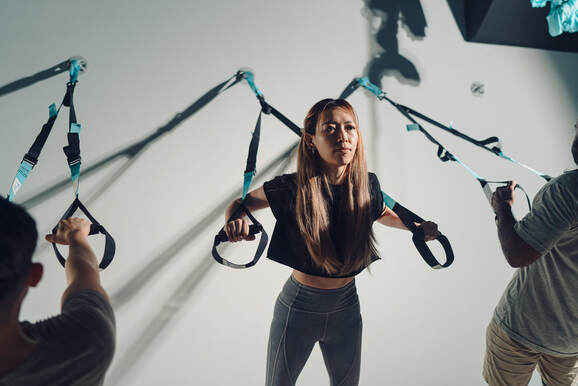
Here's a simple full body routine of strength training for women over 50 to perform twice a week. It works the legs, hips, back, chest, shoulders, arms & core. Do 2 sets of 8 to 12 reps, resting a minute between sets.
- Goblet squat or sit to stand: stand with feet hip width apart, holding a light dumbbell at your chest, & sit back as if onto a chair.
- Romanian deadlift: hinge at the hips with light free weights, keeping a neutral spine.
- Wall or incline push-ups: start with wall push-ups, keeping elbows close to your body, then move to push-ups on a bench or kitchen counter as you get stronger.
- Chest press: lie on a bench or the floor with light dumbbells & press them up, keeping a neutral spine & relaxed shoulders.
- Band or dumbbell row, or a seated row on weight machines.
- Step-ups onto a low step, holding a rail.
- Farmer's carry: walk holding a weight in each hand. This also builds grip & core strength.
- Core training: a dead bug or a short plank on your knees for core stability.
- Single-leg balance near a wall, 10 to 20 seconds each side.
This is a general example, not a personal plan. Wherever your starting point is, a good coach will adjust these workouts to your body & fitness. If anything causes sharp pain, stop & get it checked.
Women's gym in Singapore: what should midlife women look for?
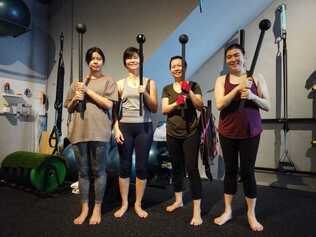
Many women over 50 feel uneasy on a busy gym floor, especially when starting out. When you look for a women gym in Singapore, or any gym, think about:
- An assessment before training, not just a tour.
- Trainers, such as a qualified personal trainer or strength & conditioning specialist, who understand menopause, bones & joint pain, & who know when to refer you to a doctor or physio.
- Small groups or one-to-one, so you get proper coaching.
- A calm, friendly setting where questions are welcome.
- Clear pricing with no pressure.
Our guide on how to choose a personal trainer in Singapore lists 10 questions to ask before you pay, & our page on MSMC as a women's gym in Singapore explains how we work with women.
How does MSMC help with strength training for women over 50?
Most of the people we see are adults from their mid-30s to their 60s, often with pain or stiffness that physio, chiro, TCM or a regular trainer hasn't fully fixed. Our trainers are sports medicine trained & work alongside physiotherapists. We don't diagnose. We test how you move, then train you from there.
- Full assessment ($190): your history, goals, joint movement, strength & balance.
- Personal training: one-to-one sessions that build up the load step by step, retested as you go.
- Small classes ($45 each): Barbell Lifting to learn squats & deadlifts with coaching, & BFRT (blood flow restriction training), which uses a special cuff so you can train with lighter weights. Ask your doctor first about BFRT if you have circulation problems, blood clots or heart problems.
- Mobility: Bandit Stretch, Deep Roll 2.0, Stretch Mob & Aerial Stretch classes help with stiffness alongside your strength work.
Read more in our guides to the best personal trainer for over 50s in Singapore, our personal training studio for women 50+, & strength training in your 60s.
Frequently asked questions
Is it safe to lift weights during menopause?
Yes, for most women lifting weights is safe & helpful when you start light, learn proper form & build up gradually. See your doctor first if you have osteoporosis, a past fracture, heart problems or unexplained pain.
How many times a week should a woman over 50 do strength training?
At least two days a week, as advised by the WHO. Two or three strength training sessions a week suits most women, alongside other physical activity like walking.
What is the best exercise for perimenopause?
The same mix as for menopause: strength training two to three days a week, weight-bearing activity, balance & mobility work. Starting strength training in perimenopause helps you build muscle & bone before the bigger drop in oestrogen after menopause.
How long before I see the exercise benefits for bone density?
Strength often improves within weeks. Bone changes slowly, so bone density research in postmenopausal women usually runs for many months, like the 8-month LIFTMOR study. The best exercise for bone density is a mix of progressive strength training & weight-bearing or impact exercise, such as squats, deadlifts, brisk walking & stair climbing, done regularly.
Can strength training help with menopause belly fat?
It can help as part of the bigger picture. Strength training keeps muscle mass, which supports your metabolism, & together with aerobic exercise, good sleep & a balanced diet it can help with fat around the middle. You can't burn fat from one spot with exercises for that area alone.
Is strength training or aerobic exercise better for cardiovascular health?
You need both. Aerobic exercise is the main way to train your heart, while strength training protects muscle & bone & is also linked with lower heart disease risk. Aim for both each week.
How much does it cost to train at MSMC?
The full assessment is $190, classes are $45 each, & personal training starts at $1,080 a month for 8 sessions or $1,500 for 10 sessions (as of November 2026).
Last updated: 21 November 2026. Written by the MSMC team & reviewed by a sports medicine trained trainer.
Ready to start?
If you'd like to get stronger through menopause & beyond, book your full assessment ($190) at MSMC, 151A Kitchener Road, near Farrer Park MRT. Book on Momence or message us on WhatsApp at +65 8973 7619. We'll go at your pace.