
A sports medicine gym starts by testing how you move, then builds your training around your body, your aches & any old injuries. A commercial gym gives you space, equipment & long opening hours, & mostly leaves the plan to you. Both can help you get fitter. MSMC (Movement & Sports Medicine Centre) on Kitchener Road, near Farrer Park MRT, is a sports medicine gym & studio, established in 2019: small, coached & built for people with pain, stiffness or an injury to come back from.
This guide explains what's different, who each one suits, & how to choose. We'll be fair: for many people, a commercial gym is exactly the right choice.
Key facts: sports medicine gym vs commercial gym in Singapore
- What a sports medicine gym is: a training space where exercise is planned using sports medicine ideas: assessment first, careful loading & injury prevention. It is not a clinic.
- What a commercial gym is: a gym where members pay a monthly fee to use equipment & classes, usually training on their own.
- Who a sports medicine gym suits: people with aches or stiffness, people back from injury, over-50s, & anyone who wants close coaching.
- Who a commercial gym suits: confident exercisers who want 24/7 access, lots of machines, a pool, or a lower monthly fee.
- At MSMC: full assessment $190, then personal training or small classes at $45 per 55 minutes, up to 6 or 9 people (as of November 2026).
- Where: 151A Kitchener Road #02, Singapore 208526, near Farrer Park MRT. Appointment based; closed Sundays & public holidays.
- How to book: Momence or WhatsApp +65 8973 7619.
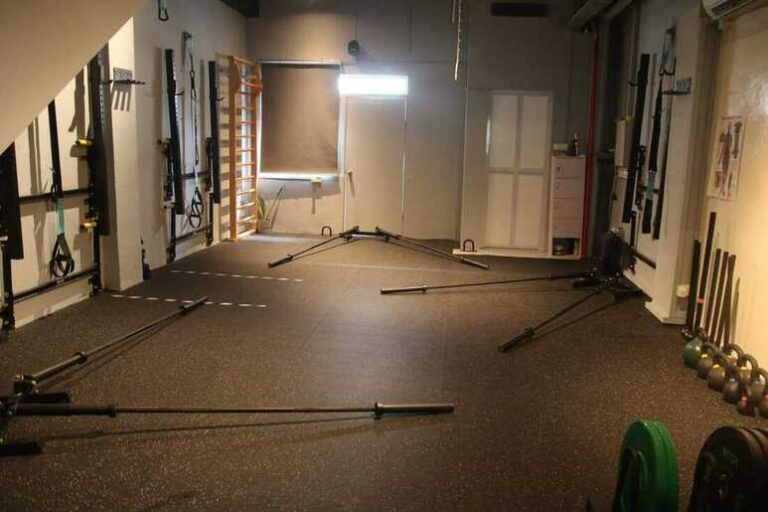
What is a sports medicine gym?
Sports medicine is the area of health care that helps people stay active, prevent sports injuries & exercise related injuries, & recover from them. A sports medicine gym takes those ideas onto the training floor. Instead of handing you a membership card, it starts by finding out how your body moves & what it can safely handle, then plans your training from there.
In practice, a sports medicine gym usually means:
- Assessment first. Your history, old injuries, range of motion, strength, balance & how you move in everyday patterns like squatting, bending & reaching, to find the root causes of a problem rather than just the sore spot. Some sports medicine centres also use exercise testing or video gait analysis.
- Movement quality before heavy weights. Fixing how you move before adding load.
- Load that builds up step by step. Increasing intensity gradually, which helps lower the risk of re-injury.
- Small groups or one-to-one. So the trainer can actually watch you & provide real feedback.
- Working alongside doctors & physios, not replacing them.
What is exercise & sports medicine?
Sport & exercise medicine is a medical specialty. Its doctors diagnose & treat sports injuries & exercise related injuries, & use exercise to help prevent & manage long-term conditions such as heart disease & diabetes. In Singapore, sport & exercise medicine is offered in several public hospitals & private clinics. A sports medicine gym is different: it isn't a clinic & doesn't diagnose, but it uses the same principles to plan your training & works alongside those doctors & physiotherapists.
Which hospital has sports medicine?
Several public hospitals in Singapore have a sport & exercise medicine department, & some private clinics offer it too. Your GP or polyclinic doctor can refer you. Go there first for the diagnosis & treatment of a new or serious injury; a sports medicine gym is the next step, for training once you've been checked.
Our motto at MSMC is "we test, we don't guess". For the bigger picture, read what sports medicine is & how it differs from physiotherapy.
What does a sports medicine gym focus on in the first few weeks?
Early on, the focus is on understanding how you move & fixing the basics before adding heavy weights. That often means:
- Posture correction & alignment: poor posture can feed into ongoing pain & injuries. Better posture usually comes from a mix of strength & flexibility work, not just "standing up straight".
- Range of motion: how far your joints move, & whether one side moves differently from the other. Some trainers use movement screens such as the Functional Movement Screen (FMS) to check joint mobility & left-right symmetry.
- Muscle imbalances & muscle tightness: finding the muscles that are doing too much & the ones doing too little.
- Strength in the main muscle groups: legs, hips, back, core & shoulders, plus general conditioning, so your body can handle daily activities & sport.
- Load management: how much, how often & how hard, so tendons, joints & muscles have time to adapt.
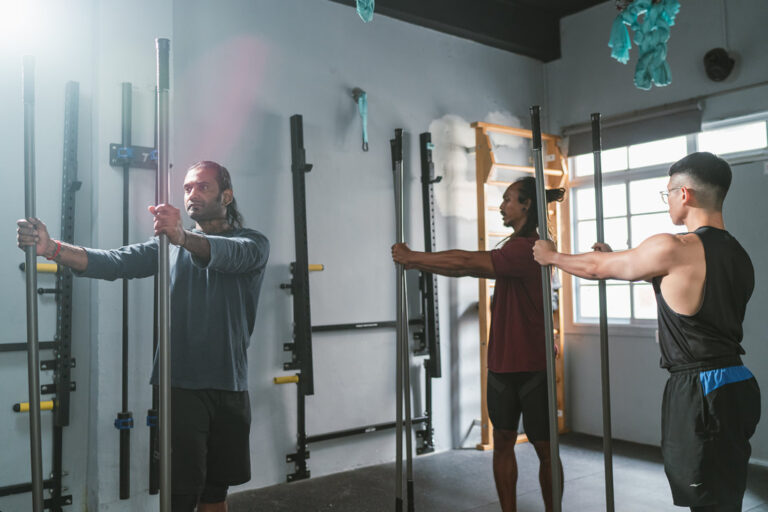
The aim is long-term: better function, more resilience & fewer setbacks, rather than a quick sweat.
Is a sports medicine gym the same as a sports medicine centre or clinic?
No. A sports medicine clinic is usually run by a multidisciplinary team of doctors & other health professionals who diagnose, order imaging such as X-rays or MRI scans, & treat injuries. Clinics may also offer treatments such as injections or shockwave therapy for chronic pain management. Physiotherapists treat patients too, using therapy & rehabilitation to reduce pain & restore strength, flexibility & function. A sports medicine gym is a place to train. Before you book a clinic, check which injuries they treat, treatments offered & who delivers them.
MSMC doesn't diagnose, doesn't have doctors or physiotherapists on the team, & doesn't give medical treatment. Our trainers are sports medicine trained (SMT) & work alongside your physio or doctor. A common path in Singapore is: doctor or physio first for diagnosis & early treatment, then a sports medicine gym to rebuild strength & get back to what you enjoy.
See a doctor first if you have pain after a fall or accident, a joint that is hot, swollen or out of shape, you can't put weight on a leg, numbness, tingling or weakness, pain that wakes you at night, or chest pain or dizziness when active. The NHS sports injuries guide explains when an injury needs urgent care.
What is a commercial gym good at?
Commercial gyms do a lot of things very well:
- Freedom: long opening hours, often 24/7, so you can train whenever suits you.
- Equipment: a fully equipped gym floor with treadmills, bikes, machines, racks & free weights. Some have a pool, sauna or steam room.
- Price: a monthly fee for access is often lower than coached sessions.
- Variety: lots of group classes, from cycling to dance.
- Community: plenty of people to train alongside.
If you have no pain, know how to train & like to set your own plan, a commercial gym can be great value. Many commercial gyms also have skilled personal trainers who can help with fitness goals such as weight management, strength or endurance.
What is the cheapest gym membership in Singapore?
The public gyms in sports centres & some community clubs are usually the cheapest way to train, often paid per entry or with a low-cost pass rather than a full membership. They suit people who are pain-free & confident training on their own. A sports medicine gym costs more because every session is coached & starts with an assessment.
Where can a commercial gym fall short?
These aren't faults, just what comes with a large, open gym:
- Most members train on their own, so mistakes in form can go unnoticed.
- Some gyms ask only a short health question form, not a movement assessment.
- Group classes can be large, so the instructor can't correct everyone.
- Muscle imbalances, tightness & old injuries can be missed when nobody checks first.
If you have a shoulder injury, a knee injury, recurring back pain or you're over 50 & new to strength training, those gaps matter more.
Sports medicine gym vs commercial gym: what are the main differences?
A general comparison (each gym is different; MSMC details as of November 2026):
| Sports medicine gym (like MSMC) | Commercial gym | |
|---|---|---|
| Starting point | Full assessment of how you move ($190 at MSMC) | Sign up & start; assessment is often optional |
| Who plans your training | A sports medicine trained personal trainer, based on the assessment | Mostly you, unless you pay for a personal trainer |
| Class size | Small: up to 6 or 9 at MSMC | Can be large |
| Focus | Strength, mobility, injury prevention & getting back to activity | General fitness, variety & freedom |
| Opening hours | Appointment based (MSMC: closed Sundays & public holidays) | Long hours, often 24/7; walk in |
| Equipment | Focused tools for strength, stretching & mobility | Lots of machines & cardio; some have a pool |
| Cost | Higher per session, as coaching is included ($45 a class at MSMC) | Usually lower monthly fee for access |
| Link with health care | Works alongside physios & doctors; no diagnosis | Usually separate from health care |
| Best for | Pain, stiffness, injury recovery, over-50s, beginners who want guidance | Confident, independent exercisers |
What does a session at a sports medicine gym look like?
Here's how it works at the MSMC studio:
- Book & tell us your goal. For example: "my knee hurts when I run", "my shoulder is stiff" or "I want to lift safely after my back injury".
- Full assessment ($190). We ask about your history & daily life, then test how you move, your strength, mobility & balance, to find what may be driving the problem.
- Your plan. We create a plan: personal training, small classes, or both, with exercises chosen for your body & a clear way to build up.
- Train & review. Each session is coached. We check how your body responds & adjust to ensure the load stays right for you. If your pain changes in a worrying way, we'll suggest you see your doctor or physio.
To see how a sports medicine trainer works, read our sports medicine trainer guide.
Personal training & group classes: what does MSMC offer in Singapore?
MSMC is a small studio rather than a fully equipped commercial gym, & our classes cater to individuals at every level. All classes are 55 minutes & $45 each (as of November 2026):
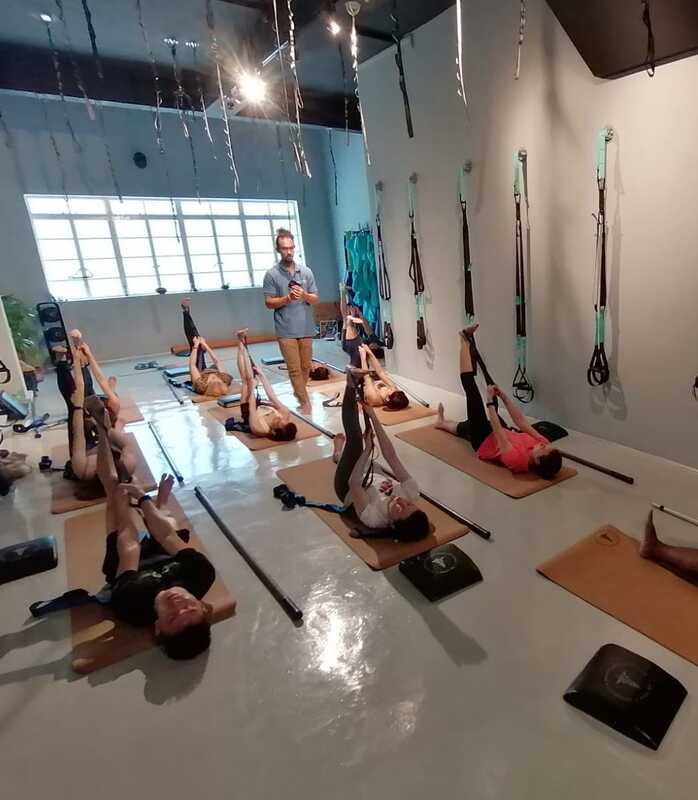
- Up to 6 people: BFRT (blood flow restriction training, building strength with lighter weights), Barbell Lifting (TUT), Bandit Stretch Class, Deep Roll 2.0 (foam rolling & release) & the Indian Clubs workshop.
- Up to 9 people: Aerial Stretch, Stretch Mob & Breathera Breathworks (breathing work with a little mindfulness, for calm & recovery).
Personal training (after the assessment): Essential $1,080 a month (8 sessions), Lifestyle PT $1,500 (12), ELITE PT $2,350 (20), or a 10-session package for $1,500.
Memberships (6-month terms): Pro $300 a month (12 classes); ELITE $369 a month for sign-ups this year (listed $399), with unlimited classes, 2 guest passes & one 30-minute F.S.T (Functional Stretch Therapy, assisted one-to-one stretching) a month.
Which is better for a safe recovery after injury?
After an injury, the recovery process usually moves from treatment (doctor or physio) to rebuilding strength, range of motion & confidence. That later stage of rehab is where a sports medicine gym helps most. Strength training that builds up gradually is a key part of getting back to sport & daily life, & of lowering the chance of setbacks.
For example, after a rotator cuff injury or another shoulder injury, a physio usually leads the early rehabilitation. Once the shoulder is calmer, strength work in the gym rebuilds the muscles around it, step by step, so you get your full ability back for lifting, swimming or reaching overhead.
What steps lower the risk of re-injury?
- Build up intensity slowly. Increase weight, time or speed a little at a time.
- Warm up with movement. Dynamic stretching before exercise helps prepare your joints & muscles.
- Mix it up. Cross-training, such as combining strength work with walking, cycling or mobility classes, spreads the load across the body.
- Track your progress. Note your pain & what you can do each week, so you & your trainer can see the trend over time.
- Look after recovery. Sleep, good nutrition & rest days all help your body adapt.
- Know when to get help. If pain gets worse instead of better, go back to your doctor or physio.
A commercial gym can work too, if you already know what to do & your physio has given you a clear programme. If you're not sure how much load is safe, a coached setting is usually the safer start. For more, read our guides to training after joint pain & injury & knee rehab after a sports injury.
How do you return to exercise after an injury? A step-by-step guide
Whether you train at a sports medicine gym or a commercial gym, safely returning to exercise after an injury follows the same broad steps. Many athletes & fitness enthusiasts rush this part & end up with further injury. A gradual approach usually works better.
Step 1: Get the all-clear from a healthcare professional
Before you train an injured area, get it checked by a doctor, physiotherapist (physical therapist) or sports medicine specialist. They can tell you the extent of the injury, how far along the healing process is, & which movements to avoid for now. This is crucial if the injury was recent, severe or keeps coming back. A sports medicine trained personal trainer then works within that guidance; they don't replace it.
Step 2: Set realistic expectations & start slow
Getting back to your pre-injury fitness level takes time, & the timeline is different for everyone. Start slow, with lighter loads & shorter sessions than you're used to. Intense workouts too early put too much strain on tissue that is still healing & raise the risk of further damage. Realistic expectations help you stay patient & consistent.
Step 3: Restore range of motion & improve flexibility
Before you rebuild strength, get the affected area moving well again. Gentle mobility work, stretching & foam rolling can help you improve flexibility & range of motion. At MSMC, classes like Bandit Stretch & Deep Roll 2.0 (foam rolling & release) are built around this kind of work.
Step 4: Rebuild strength with gradual progression
Strength training is the core of most injury rehabilitation. Start with specific exercises for the injured area & the muscles around it, using body weight, resistance bands or light weights. Then gradually increase intensity: a little more weight, a few more reps or a slightly harder exercise each week, as long as your body handles it well. Proper form matters more than the number on the weight. BFRT (blood flow restriction training) is one way to build strength with lighter weights when heavy loads aren't right yet.
Step 5: Bring back endurance with low impact exercises
Low impact exercises such as walking, cycling or swimming help rebuild endurance & general fitness without pounding your joints. Add them alongside your strength work, then build up time & effort slowly.
Step 6: Plan proper rest & rest days
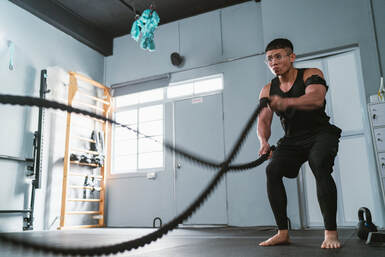
Proper rest is part of the rehabilitation process, not a break from it. Your muscles, tendons & joints adapt between sessions, so build rest days into your week. Sleep, good nutrition & managing stress all support recovery & your overall well being.
Step 7: Know the difference between discomfort & pain
Some muscle soreness or mild discomfort after training is normal. Sharp pain, pain that gets worse during a session, swelling, or pain that lasts into the next day is a sign to ease off. If you experience pain like this, stop that exercise & tell your trainer, & check in with your doctor or physio if it doesn't settle.
Step 8: Test before you return to sport
Before you go back to running, badminton, pickleball or the gym floor on your own, check that the injured side is close to the other side in strength, balance & control. A successful return is one where you feel confident, not just pain-free. Keep some strength work going once you're back, to help prevent future injuries.
Personal trainer, physiotherapist or sports medicine specialist: who does what?
| Professional | What they usually do | When to see them |
|---|---|---|
| Sports medicine doctor or specialist | Diagnoses injuries, orders imaging, gives medical treatment | New, severe or unexplained injuries & pain |
| Physiotherapist (physical therapist) | Treats injuries & leads early rehabilitation | After diagnosis, & in the early stages of recovery |
| Sports medicine trained personal trainer (like MSMC's) | Assesses movement, plans & coaches training, builds strength & fitness | When you're ready to train, or for aches & stiffness that need exercise |
| General personal trainer at a commercial gym | Coaches workouts towards fitness goals such as strength, weight or general fitness | When you have no injury concerns & want structure & motivation |
Each has its own expertise, & the best results often come when they work together.
Is a sports medicine gym good for back pain?
For many people with ongoing back pain or other chronic pain, staying active & doing the right exercises helps more than rest. The NHS recommends exercise for back pain. A sports medicine gym can help by checking how you bend, lift & move, then building strength around that. If back pain comes with numbness, leg weakness or changes in bladder or bowel control, see a doctor straight away.
How do you choose between them? Questions for a better decision
Both are good options for different individuals & different needs. Ask yourself: Do I have pain or old injury issues? Do I know what exercises are safe for me? How much time do I have, & when? How much care & coaching do I want? Your answers point the way.
A sports medicine gym may suit you if:
- You have aches, stiffness or an injury that keeps coming back.
- You've finished physio but don't feel ready to train alone.
- You're over 50 & want to get stronger safely. See the best gym in Singapore if you're over 50.
- You want someone to watch your form every session.
- You have a health condition such as diabetes or heart disease, your doctor has said exercise is good for you, & you'd like it supervised.
- You're an athlete who wants to enhance athletic performance without breaking down.
- You're happy to book ahead.
A commercial gym may suit you if:
- You have no pain or injuries & know how to train.
- You want 24/7 access, lots of machines, or a pool.
- You want the lowest monthly cost.
- You enjoy a busy, lively gym.
You can also use both: learn to move well at a sports medicine gym, then train on your own at a commercial gym near home, & come back to check your progress.
How much exercise do you need each week?
Wherever you train, the World Health Organization advises adults to do 150 to 300 minutes of moderate activity a week, plus muscle-strengthening activity on at least 2 days. Older adults should also do balance & strength activities on 3 or more days a week. If that sounds like a lot, start smaller. Some activity is better than none.
Frequently asked questions
What is a sports medicine gym?
A gym that uses sports medicine ideas to plan your training: an assessment first, careful loading & a focus on preventing injury. It's a place to train, not a clinic.
Is a sports medicine gym only for athletes?
No. Most people who benefit aren't athletes. It helps anyone with aches, stiffness, an old injury or a goal to stay strong as they age.
Does MSMC have physiotherapists?
No. MSMC's trainers are sports medicine trained, & we work alongside physiotherapists & doctors. We don't diagnose or treat injuries medically.
Is a sports medicine gym more expensive than a commercial gym?
Usually yes per session, because coaching is included. At MSMC, a class is $45 & the full assessment is $190 (as of November 2026).
How do I know if a gym injury is serious?
See a doctor first if you have severe pain, swelling, a joint that looks out of shape, you can't put weight on it, numbness or weakness, pain at night, or chest pain or dizziness when active. Mild soreness that eases in a day or two is usually normal.
Is it okay to work out with an injury?
Often yes, if a doctor or physio has checked it & you train around it. You can usually keep the rest of your body active while the injured area heals, then build that area back up gradually. Stop any exercise that causes sharp or worsening pain.
Where is MSMC?
Our studio is at 151A Kitchener Road #02, Singapore 208526, near Farrer Park MRT. It's appointment based & closed on Sundays & public holidays.
Last updated: 21 November 2026. Written by the MSMC team & reviewed by a sports medicine trained trainer.
Next steps: start with a full assessment
If you're tired of guessing what your body can handle, start with a full assessment ($190) at MSMC, 151A Kitchener Road, near Farrer Park MRT. We'll test how you move, find what's driving the problem & show you a clear plan. Book on Momence or message us on WhatsApp.
Book your assessment on WhatsApp Call or WhatsApp +65 8973 7619