
If your back starts aching by 3pm after a morning at the desk, lower back pain when sitting usually comes from staying in the same position for too long, not from one "wrong" chair. Nine hours of prolonged sitting plus the MRT commute, often slumped & leaning forward towards a laptop, loads the discs, joints & back muscles in one way for hours, so they ache. The fix doesn't need a gym: a better seated posture, getting up every 30 minutes for a 2-minute routine you can do in office clothes, & 10 minutes of strength work at home a few evenings a week.
Last updated: 26 November 2026. Written by the team at MSMC (Movement & Sports Medicine Centre), a sports medicine personal training studio at Farrer Park, Singapore.
Key facts: lower back pain when sitting
- Most sitting-related back pain is mechanical: tight muscles, tired back muscles & postural stress, not damage.
- The best sitting position is your next one. Changing position every 30 minutes matters more than perfect posture.
- A dull aching sensation that eases when you stand & walk is the common pattern.
- Burning pain, numbness or pain running down one leg points to an irritated nerve: get it checked.
- Loss of bladder function, numbness around the groin or a weak leg needs urgent medical attention.
- Strong core muscles, glutes & hip flexors that can lengthen make long periods of sitting easier.
Why does my lower back hurt when I sit?
When you sit for extended periods, three things happen.
Postural stress, tight muscles & poor posture
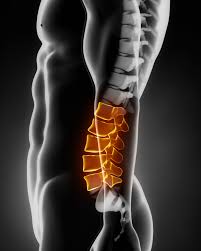
Slumped sitting rounds the lower spine & increases pressure on the spinal discs compared with standing tall. Your hip flexors stay shortened for hours, so they feel tight when you stand up. And the back muscles that hold you upright get tired, especially if you have weak core muscles & glutes, so you sink further into the chair. The result is muscle tightness & a dull ache across the belt line that builds through the afternoon. Poor posture on its own rarely damages anything, but improper posture held through hours of prolonged sitting is a common reason this muscle pain keeps returning.
Muscle strain or a herniated disc
Sitting can also irritate an existing problem. A muscle strain from the weekend's badminton or a heavy lift can flare at the desk, & the back muscles around it may tighten into muscle spasms. A herniated disc often feels worse sitting & bending forward, because both load the disc. A herniated disc can also press on a nerve root, which is why some people feel pain along the sciatic nerve into the buttock or leg.
Nerve compression & spinal stenosis
Spinal stenosis (narrowing of the spinal canal, sometimes with bone spurs on the facet joints) usually behaves the other way: it often feels better sitting & worse when you stand or walk. When a disc or a narrowed space presses on a nerve (nerve compression), lower back pain often comes with burning pain, pins & needles or numbness in one leg rather than just an ache.
A 60-second self-check
Answer these honestly. They won't diagnose you, but they show what kind of back pain when sitting you are dealing with, & what to try first.
| What you notice | What it may point to | What to do first |
|---|---|---|
| Dull ache after 30-60 minutes of sitting, better when you stand & walk | Postural stress, tired back muscles, tight muscles around the hips | Desk set-up, frequent breaks & the 2-minute routine below |
| Sharp pain when you bend forward or sit down, after lifting or sport | Muscle strain or an irritated disc | Keep moving gently, avoid heavy bending for a few weeks, build up strength |
| Burning pain, pins & needles or pain below the knee in one leg | Nerve compression, often the sciatic nerve | See a doctor if it lasts more than a few weeks or keeps getting worse |
| Better sitting, worse standing or walking far | Possibly spinal stenosis | See a doctor to find the underlying cause, then train with guidance |
| Pain with fever, weight loss, after a fall or car accident | Underlying medical conditions | Seek medical attention first |
Good posture at your desk: a five-minute set-up
Good posture at a desk isn't about sitting rigidly upright all day. Proper posture is a correct sitting position you can hold without effort, so your back muscles aren't working overtime. The easiest way to maintain good posture is to set the desk up once, then keep moving.
- Feet flat on the floor (or on a box if your feet dangle), knees level with or slightly below your hips.
- Sit back so your bottom touches the back of the chair. Put a lumbar support or a rolled up towel in the small of your back if the chair has none.
- Screen at eye level, about an arm's length away, so you are not leaning forward. On a laptop, use a stand & a separate keyboard.
- Elbows close to your sides, shoulders relaxed, keyboard & mouse within easy reach.
- Set a 30-minute timer. When it goes off, stand up, even if only to switch positions for a few seconds.
An ergonomic chair helps, but no chair fixes sitting still for four hours. A standing desk helps too, as long as you alternate: an hour in a standing position all at once tires the back in a different way.
| Fix | What it does well | Its limit |
|---|---|---|
| Ergonomic chair | Supports a good sitting posture, lumbar support built in | You still need to move; costs more |
| Rolled up towel | Cheap lumbar support on any chair with a backrest | Only helps if you sit back |
| Standing desk | Easy way to change position | Standing all day tires your legs & back too |
| Frequent breaks | The single most useful habit for sitting related back pain | Needs a timer, or you forget |
| Strength training | Builds back, abdominal muscles & glutes that hold you up | Takes a few weeks to feel |
The MRT commute & the rest of your day
Your back doesn't only sit at the desk. If you work in the CBD, the commute, lunch & the evening count too.
- On the MRT: if you get a seat, sit back rather than perching forward over your phone. If you're standing, keep your knees soft, hold the grab pole & shift your weight from one leg to the other.
- Bags: use both straps of a backpack, or swap shoulders on a tote bag, so one side of your lower spine isn't loaded all day.
- Lunch: hawker centre stools have no backrest. Sit tall for the meal, then take a short walk before you return to your desk.
- Evenings: a slumped sofa after work undoes good office habits. Lie on your back with your knees bent or sit on a firm chair instead.
The 2-minute routine you can do in office clothes, every 30 minutes
No mat, no changing, no getting on the floor. Do it beside your desk or in the pantry.
- Stand up & walk for 20 seconds. Movement brings blood flow back to the back muscles & leg muscles.
- Standing back bend, 5 slow reps. Hands on your hips, gently lean back as far as is comfortable, then return. Easier: smaller range. Skip it if leaning back causes pain or pain down one leg.
- Split-stance hip flexor stretch, 20 seconds each side. Step one foot back, tuck your tailbone under & feel a gentle stretch at the front of the back hip. It should feel like a stretch, never a pinch.
- Seated figure-four, 20 seconds each side. Sit tall, rest one ankle on the other knee & lean forward slightly from the hips. Easier: keep the ankle lower, on the shin.
- Sit-to-stand, 8 reps. Stand up from your chair without using your hands, then sit down slowly. Harder: take 3 seconds to sit.
You should feel looser & warmer afterwards, not sore. If any step causes burning pain or pain that spreads, stop that step.

Strength work for core muscles & glutes (10 minutes, 3 evenings a week)
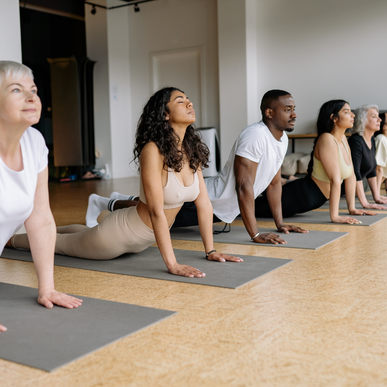
The routine above eases pain from prolonged sitting in the moment. These four moves build the strength that makes sitting easier, & they take about 10 minutes on your bedroom floor: no gym, no equipment beyond a broomstick. Do 2 sets of each, 3 times a week.
| Exercise | Reps or time | Easier version | Harder version | What it should feel like |
|---|---|---|---|---|
| Glute bridge | 10 reps, 2-second hold at the top | Smaller lift | One leg at a time | Bottom & back of thighs working, not the lower back |
| Bird dog | 6 each side, 5-second hold | Move only the arm, then only the leg | Add a light ankle weight | Steady trunk, no wobble |
| Side plank on knees | 20 seconds each side | 10 seconds | Full side plank on feet | Side of the waist working |
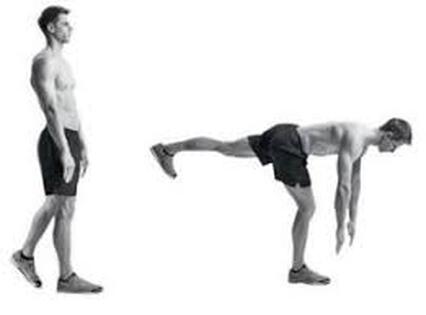
| Hip hinge with a broomstick | 10 reps | Smaller range | Hold light dumbbells | Stretch in the back of the thighs, back stays still |
"I have no time": fitting it into a busy workday
- Back-to-back meetings: stand for the first few minutes of each video call, or take phone calls on your feet.
- Deadlines: link the routine to something you already do, such as each refill of your water bottle.
- No standing desk at work: a box or a stack of files under your laptop works for 20 minutes at a time.
- Long day at the client's office: walk to a further toilet or take the stairs for one floor.
Pain relief & pain management: what to avoid
- Sitting for long periods without moving, even in a good chair.
- Heavy bending & lifting first thing after a long flight or a long drive.
- Days of bed rest. Gentle movement helps the healing process more than lying still.
- Stretching hard into pain, or forcing a position that makes pain spread down one leg.
- Relying only on over the counter medication. Pain relief from a pharmacy, such as nonsteroidal anti inflammatory drugs, can help short term, but check with a doctor or pharmacist first, & it doesn't fix the underlying cause.
Red flags: see a doctor first
Most back pain when sitting is not serious. Seek medical attention before you start any exercise plan if you have:
- loss of bladder function or bowel control, or numbness around the groin & inner thighs (go to A&E straight away: this can mean pressure on the nerves at the end of the spinal cord);
- weakness in one leg, or foot drop;
- severe lower back pain after a fall or car accident;
- fever, unexplained weight loss or a history of cancer;
- burning pain or nerve pain that keeps spreading, or pain persists for more than a few weeks despite self care.
Back pain that lasts longer than about 12 weeks is called chronic pain, & it deserves a proper check rather than more guessing. Your GP can explain your treatment options, from pain treatment to a referral for scans or physical therapy, & rule out anything that presses on the sciatic nerve. Many people start with physical therapists, then move on to strength training once they are discharged.
Your plan for this week
- Day 1: fix your desk set-up & set the 30-minute timer.
- Days 1-7: do the 2-minute routine every time the timer goes off, at least 6 times a day.
- Days 2, 4 & 6: do the strength work in the evening.
- Every day: walk for 10 minutes after lunch.
- Day 7: notice how long you can sit before the ache starts. If it is longer than on Day 1, keep going. If it's worse, or you have any red flags, see a doctor.
When you want a plan made for you
Self care works for many people. If your lower back pain when sitting keeps coming back by mid-afternoon, or you're not sure which exercises suit your back, that's where a sports medicine trainer helps. At MSMC, a sports medicine trainer is a personal trainer trained in movement science & corrective exercise for people with pain. We start with a $190 full assessment: we test how you sit, bend & move, find what drives your pain, then build a training plan around your working hours & your commute. MSMC is at Farrer Park, a short ride on the North East Line from the CBD. We test, we don't guess. We are not a physiotherapy clinic; we work alongside doctors & physiotherapists & often pick up where physical therapy ends.
See personal training & the $190 assessment
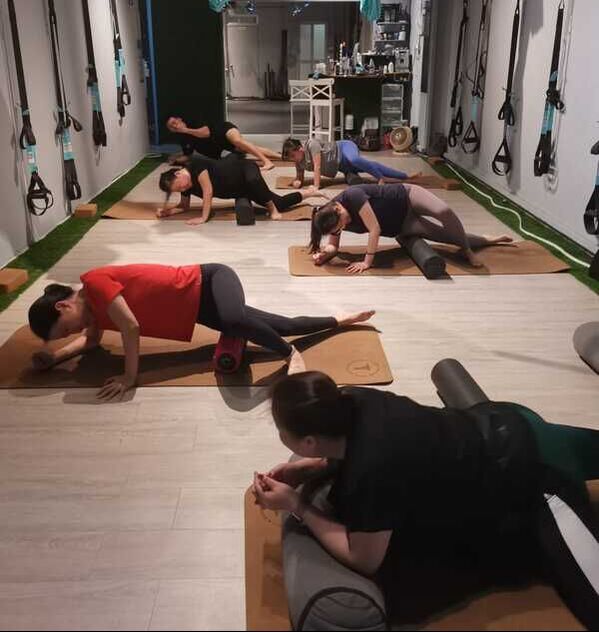
Prefer to start in a group? Our small classes build the core muscles, hips & back strength that make sitting easier. Use the code READ10 for 10% off one class: book on our class schedule page & enter READ10 at checkout (one use per customer).

Confused, worried or don't know where to start?
That's normal. Back pain can feel frightening, & the internet gives you ten different answers. Here is exactly what happens if you come to MSMC:
- You message or book. Tell us what hurts & when. No pressure to buy anything.
- We check for red flags first. If anything needs a doctor, we tell you honestly & point you there before we train you.
- Your full assessment ($190). We watch how you sit, stand, bend & lift, & explain in plain English what we find.
- A plan you understand. You leave knowing the 3-4 exercises that matter most for your back & how often to do them.
- Training at your pace. Personal training or classes, starting gently & progressing only when your back is ready.
You don't need to be fit to start, & you don't need to figure it out alone.
Lower back pain when sitting: FAQs
Why does my lower back hurt when I sit but not when I stand?
Sitting, especially slumped, puts more load on the spinal discs & keeps the hip flexors shortened. When you stand & walk, that load changes & blood flow improves, so the ache eases. This pattern is common with postural stress & some disc problems.
What is the best sitting position for lower back pain?
Sit back in the chair with feet flat, knees level with or just below your hips, a lumbar support or rolled up towel in the small of your back & the screen at eye level. Then change position at least every 30 minutes.
Can weak core muscles cause back pain when sitting?
They can contribute. Weak core muscles & glutes make it harder to hold a seated posture, so the back muscles tire & you slump. Strength work such as bridges & bird dogs helps many people sit longer with less pain.
How do I tell if my lower back pain is serious?
See a doctor first if you have loss of bladder or bowel control, numbness around the groin, leg weakness, fever, weight loss, pain after a fall or car accident, or nerve pain that keeps spreading.
How long does sitting-related back pain take to get better?
Many people feel a difference within a few weeks of better habits & regular exercise. If pain persists beyond that, get it checked so the underlying cause can be found.
I don't have time for the gym. What's the minimum that helps?
The 2-minute routine every 30 minutes at your desk, plus 10 minutes of strength work 3 evenings a week at home. That is far easier to fit into a workday than a gym session.
Can a personal trainer help with lower back pain?
Yes, if the trainer understands pain & rehab. A sports medicine trainer assesses how you move, works alongside your doctor or physiotherapist & builds strength safely. At MSMC this starts with a $190 full assessment.