
How much exercise do seniors need? Singapore's Physical Activity Guidelines, in line with the World Health Organization, suggest 150-300 minutes of moderate aerobic activity a week (about 30 minutes on 5 days), strength & balance work on at least 3 days, & less time sitting. If you're starting from zero, any physical activity is better than none: begin well below that & build up slowly.
At MSMC (Movement & Sports Medicine Centre) on Kitchener Road, near Farrer Park MRT, our sports medicine trainers help people in their 50s, 60s, 70s & beyond build a week of exercise that fits their body. It matters because the right mix helps you stay strong, steady on your feet & independent for longer. Here are the numbers & a simple sample week.
Key facts: how much exercise do seniors need?
- Aerobic activity: 150-300 minutes of moderate intensity aerobic activity a week, or 75-150 minutes of vigorous activity, or an equivalent combination.
- Strength & balance: multicomponent activity that works strength & functional balance on at least 3 days a week.
- Sitting: sit less & break up long periods of sitting.
- Sources: the Singapore Physical Activity Guidelines 2022 from HPB & Sport Singapore (HPB summary) & WHO's physical activity guidelines (WHO fact sheet).
- At MSMC: a full assessment ($190, as of November 2026), then a plan. 151A Kitchener Road #02, Singapore 208526; appointment based, closed Sundays & public holidays.
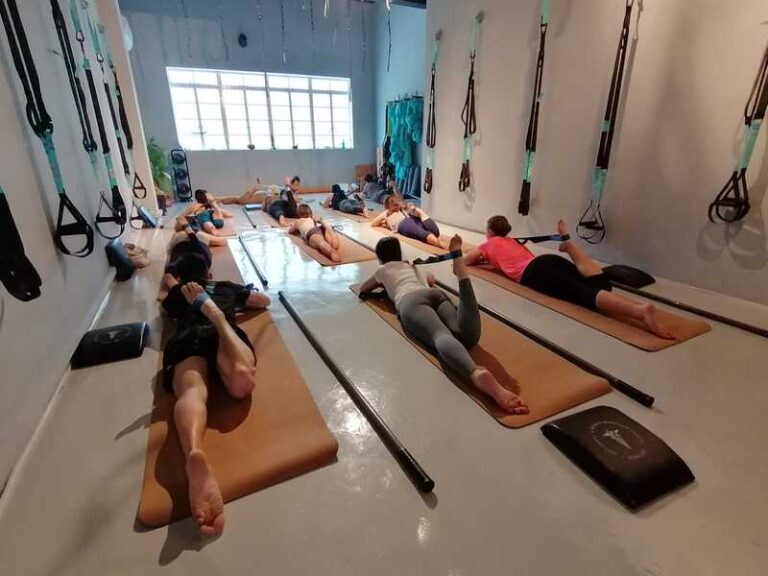
Physical activity recommendations for older adults: the weekly numbers
The recommended amount of physical activity for older adults, in one table:
| Type of activity | How much each week | Examples |
|---|---|---|
| Moderate aerobic activity | 150-300 minutes (about 30 minutes, 5 days) | Brisk walking, cycling, swimming, dancing |
| Vigorous aerobic activity (instead of, or mixed with, moderate) | 75-150 minutes | Hiking uphill, jogging, fast cycling |
| Strength & balance (multicomponent) | At least 3 days | Squats to a chair, resistance bands, yoga, a strength class |
| Sitting | Less, & broken up | Stand & move every 30-60 minutes |
WHO's guidance for adults also includes muscle-strengthening activities on 2 or more days a week, & the UK's NHS guidelines for adults say much the same. For older adults, both the Singapore & WHO guidelines recommend multicomponent work on 3 or more days. The US Department of Health & Human Services is similar. These recommendations are a target, not a starting line: building up is a gradual process.
Moderate vs vigorous intensity: the talk test
You don't need gadgets. Use the talk test:
- Moderate intensity aerobic activity: you're breathing faster & your heart rate is up, but you can still hold a conversation. You can talk, but you can't sing.
- Vigorous intensity physical activity: you're breathing hard & can only say a few words before you need a breath.
A heart rate monitor can help, but some blood pressure & heart medicines change how your heart rate responds, so ask your doctor what effort is safe for you. For most beginners, moderate effort is the right point to start & helps improve heart health safely.
Balance activities & preventing falls
Strength & balance help protect your independence as you age. Stronger legs & steadier feet reduce the risk of falls & help reduce the injuries that follow. A few easy ideas (for safety, stay near a wall or counter):
- standing on one leg;
- heel-to-toe walking;
- tai chi or gentle yoga, which also improve flexibility;
- sit-to-stand squats from a chair.
Lifting light weights or using resistance bands builds the muscles in your legs, hips & arms that hold you steady, & strength training helps slow the muscle loss that comes with age. Strength training doesn't have to mean push ups or sit ups on the floor; a trainer finds a safe position for each exercise, & a comfortable starting position matters more than lifting heavy. More in our guide to strength training in your 60s.
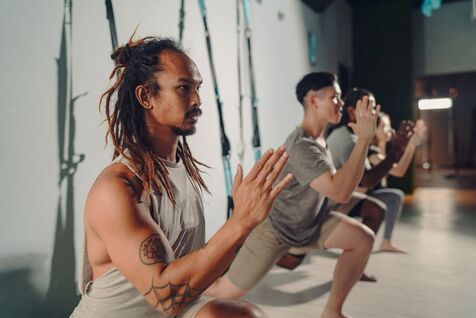
A simple sample week
Start with half of this, or less, & build up over weeks:
- Day 1: 30-minute brisk walk.
- Day 2: strength & balance session (30-45 minutes): chair squats, band rows, wall presses for the arms, one-leg stands.
- Day 3: 30-minute walk or swim.
- Day 4: a small group strength class.
- Day 5: 30-minute walk, cycle or dance.
- Day 6: strength session again, or tai chi in the park.
- Day 7: rest, gentle stretching for flexibility, or an easy stroll.
That's about 150 minutes of aerobic activity & 3 strength days. Three 10-minute walks count too.
Should you walk less after 70?
No, not just because of your age. Walking is one of the best ways of staying active at any age. What changes is how you build up: more gradually, with good shoes & attention to any joint pain or arthritis. If it hurts, find out why rather than stopping.
How far should a 70-year-old walk?
There's no single right distance. A 2022 meta-analysis in The Lancet Public Health found that, for adults aged 60 & over, the benefits for lower mortality risk levelled off at about 6,000-8,000 steps a day. If you do 2,000 steps today, aim for 3,000, not 8,000, then increase by a few hundred steps a day each week.

Can a senior exercise too much?
Yes, mainly by increasing too fast. Signs you're overdoing it: soreness that lasts more than 2-3 days, joint pain that gets worse, poor sleep, or feeling drained rather than energised. Keep at least one easy or rest day, & increase only one thing at a time: time, weight or effort.
Exercising with chronic conditions: see a doctor first
Exercise has many benefits for people with chronic conditions such as high blood pressure, diabetes, arthritis, heart disease, depression & life after cancer treatment. But if you have chest pain, dizziness, unexplained breathlessness, recent surgery or uncontrolled blood pressure, see a doctor first & consult them before starting. Once you're cleared, a trainer works within the limits your doctor sets. MSMC doesn't diagnose or treat medical conditions.
Why physical activity is important as you age
Being physically active can improve your heart, muscles, body weight, mood & sleep, & supports a healthy, independent life. It's never too late to get active: a large 2019 study in the journal JAMA Network Open, published by the American Medical Association, followed 315,059 adults & found that people who became more active in midlife (ages 41-60) had a lower risk of death, similar to people who'd always been active. More on the benefits of exercise for seniors & starting at 50.
How MSMC builds your week
At MSMC, everyone starts with a full assessment ($190). A sports medicine trainer (a personal trainer trained in movement science & in how exercise can help with certain health conditions) tests how you move, then builds a plan around what you enjoy & any health concerns, whether you're healthy & new to exercise or managing a long-term condition. That might be personal training, our small strength classes for seniors (most have a maximum of 6 people), a stretch class, or training at home. New to all this? Start with our beginner's guide.

FAQs: how much exercise seniors need
How often should the elderly exercise?
On most days: about 30 minutes of moderate activity on 5 days, with strength & balance work on at least 3. If that's too much now, start with 10 minutes a day & build up.
What is the recommended amount of exercise for seniors?
Singapore's 2022 guidelines & WHO recommend 150-300 minutes of moderate aerobic activity a week, multicomponent strength & balance activity on at least 3 days, & less sitting. The numbers on this page are for healthy older adults; start lower if you're new.
Is 10,000 steps a day enough?
For most older adults, 10,000 steps is more than they need for health benefits. Research in The Lancet Public Health found benefits level off at about 6,000-8,000 steps a day for people aged 60 & over. Steps also don't replace strength & balance work.
How far should a 70-year-old walk every day?
There's no single number. Start from what you walk now & add a little each week. For people aged 60 & over, research suggests benefits level off at about 6,000-8,000 steps a day, a sensible goal to build towards.
Can a 70-year-old exercise too much?
Yes, mainly by increasing too quickly. Soreness lasting several days, worsening joint pain or constant tiredness are signs to ease off. Keep rest days.
What is the 3-3-3 rule?
It's an informal rule with no single official definition. One common version is 3 days a week, 3 exercises, 3 sets; another is 3 sets of 3 exercises in 30 minutes. For a beginner over 50, it can be a simple start: pick 3 easy exercises, such as chair squats, wall presses & band rows, do 1-2 sets at first, & build towards 3 sets over a few weeks.
Last updated: 24 November 2026. Written by the MSMC team & reviewed by a sports medicine trained trainer.
Want help building your week? Book a full assessment
If you'd like a plan that fits your body & your week, start with a full assessment ($190) at MSMC, 151A Kitchener Road, near Farrer Park MRT. We'll test how you move, explain what we find in plain words & help you build up at a pace that feels right. Book on Momence or message us on WhatsApp at +65 8973 7619.