
No, it isn't too late to start exercising at 50. In a study of 315,059 adults, people who became active in midlife (41 to 60) had a lower risk of early death, much like lifelong exercisers (Saint-Maurice et al., JAMA Network Open, 2019). Your muscles, balance & fitness still respond at 50, 60 & beyond.
At MSMC (Movement & Sports Medicine Centre) on Kitchener Road, near Farrer Park MRT, our sports medicine trainers help adults in their 50s onwards start safely, even if they've never had a workout routine. This article shows how, with five gentle tips to begin.
Key facts: is it too late to start exercising at 50?
- What to aim for: 150 to 300 minutes of moderate activity a week, plus strength work at least 3 days a week. Build up slowly.
- Who MSMC helps: adults & seniors in their 50s onwards, including beginners.
- Not offered: physiotherapy, diagnosis or medical treatment.
- First step: a full assessment, $190 (as of November 2026).
- Where: 151A Kitchener Road #02, Singapore 208526, near Farrer Park MRT. Appointment based, closed Sundays & public holidays.
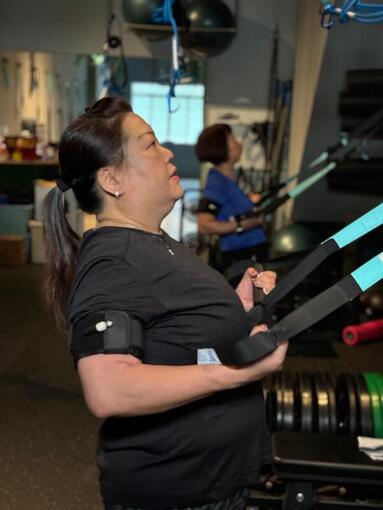
Is 50 too old to start exercising?
Not at all. Many people start in their 50s or 60s, after years of work & family. What you do from now on counts, & exercise at any age can improve your quality of life.
The Singapore Physical Activity Guidelines 2022 & the World Health Organization both ask older adults to stay active, do strength work several days a week & sit less. These are targets to grow into. HealthHub suggests starting with 5 to 10 minutes of light activity.
What happens in your body when you start exercising after years of inactivity?
The first few weeks
Your body & brain get better at using the muscles you have, so movement feels smoother. Mild soreness after a new workout is normal & eases. Keep the intensity low at first.
Aerobic exercise & strength training over the months
Regular aerobic exercise (cardio) such as brisk walking supports heart health & cardiovascular health. Your resting heart rate may come down & many people notice better energy levels. With steady strength training, muscle mass & muscle strength build, & stiff joints often loosen.
Why muscle strength, balance & bone density matter more after 50
Strength training for everyday life
From midlife, muscle & steadiness slowly fade if we don't use them, so strength training becomes essential. Resistance training with bands, weights or your own body weight helps you build strength for daily activities like getting up from the floor. Load-bearing exercise also helps protect bone density.
Balance exercises for preventing falls
Balance exercises help with preventing falls, a crucial risk to independence as we age. Stability work can be as simple as standing on one leg by a wall, or tai chi. Read more on strength training in your 60s.
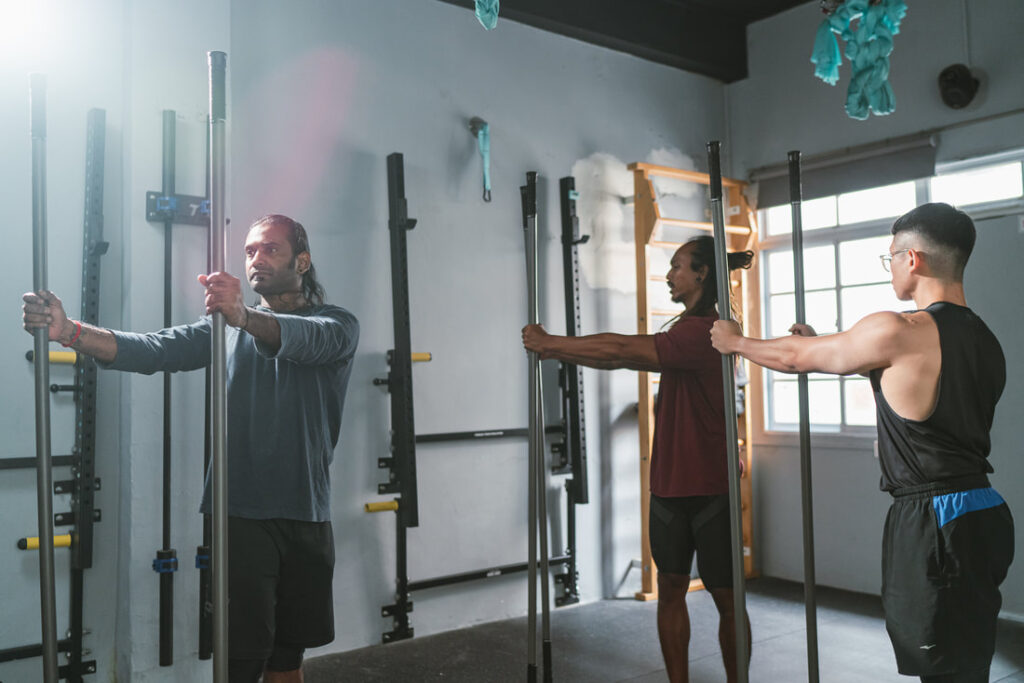
How do I start exercising after years of inactivity? 5 gentle first steps
- Start with walking. Ten minutes most days, in a good pair of shoes, with a water bottle. Swimming or cycling are gentle cardio too.
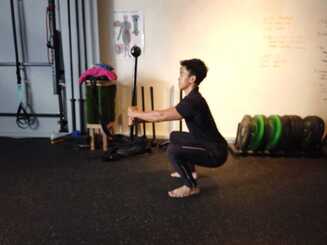
- Add a short strength workout twice a week. Chair squats, wall push ups & heel raises, 2 sets of 8. Add light weights or resistance bands later.
- Practise steadiness daily. Hold a counter & stand on one leg.
- Keep moving. Stretching, stairs & a brisk household chore all count. Mobility work & stretching keep your joints moving.
- Raise the intensity slowly. Add a little only when the last step feels easy, with rest days for recovery to lower the risk of injury.
Pick exercise you enjoy: the routine you stick with beats the perfect routine you drop. See our beginner's guide to exercise for seniors & how much exercise seniors need.
Going it alone vs a big gym vs a sports medicine trainer
| Going it alone | A big gym | Sports medicine trainer at MSMC | |
|---|---|---|---|
| Where you start | Guesswork | A general induction | A full assessment of how you move |
| Who checks your form | No one | Only if you book a trainer | Your trainer, every session |
| Stiff joints, pain or an old injury | Hard to know what's safe | Depends on the trainer | Trained in corrective exercise |
See also sports medicine trainer vs personal trainer after 50.
Common worries at the start of your fitness journey
"My joints are too stiff." Gentle, low-intensity movement usually helps them. You don't need jogging to get fit.
"I have pain." We work around pain, never through it. If it's new or worsening, see a doctor first.
"I'm not fit enough." You don't need any fitness to start. We focus on where you are today.
"I'll feel embarrassed." Our studio & classes are small & private, or opt for home personal training.
When to see a doctor first
See your doctor before you start if you have chest pain, dizziness or fainting, unexplained breathlessness, recent surgery or a fall, uncontrolled blood pressure, or a poorly managed heart, lung or diabetes condition. We'll follow their advice.
How MSMC makes starting easy
Every programme starts with a full assessment ($190): we test how you move & plan with a clear focus. A sports medicine trainer is a personal trainer trained in movement science & how exercise can help with certain health conditions, plus corrective exercise for people with pain. That's vital after 50.
Then train one to one (PT memberships from $1,080 a month for 8 sessions, or 10 sessions for $1,500) or join small classes ($45; most max 6 people) for mobility & functional strength. Home personal training is offered too. See our rates & the best personal trainer for over 50s.
FAQs about starting exercise at 50
Is it ever too late to start exercising?
No. People who become active in midlife still gain health benefits, & muscles respond to training into older age.
What kind of exercise is best for a 50-year-old?
A mix: walking or other aerobic exercise, strength training with weights or bands twice a week, plus balance & stretching. Functional moves like squats help most in daily life.
What is the 3-3-3 rule?
It's an informal rule with no single official definition. One version is 3 days a week, 3 exercises, 3 sets; another is 3 sets of 3 exercises in a 30-minute workout. A beginner over 50 can try 3 easy exercises (chair squats, wall push ups, heel raises), starting with 1 or 2 sets & a rest day between sessions.
Can I lose weight exercising after 50?
Many people can. Exercise works best with how you eat: eat well, in moderation, while strength training helps you keep muscle as the weight comes off. Aim for a healthy weight you can keep.
How long before I feel a difference?
It varies. Many people find daily tasks a little easier within a few weeks of regular walking & strength work, while strength builds over months.
Do I need to be fit before I start?
No. A good trainer will lead you step by step. Your first sessions should feel like a gentle challenge, never a strain, & can even be fun, in PT or small classes. The next challenge comes when you're ready.
Last updated: 24 November 2026. Written by the MSMC team & reviewed by a sports medicine trained trainer.
Ready to start? Book your full assessment
It isn't too late to get stronger, whatever your age. Start with a full assessment ($190) at MSMC, 151A Kitchener Road, near Farrer Park MRT. Book on Momence or book a $190 full assessment on WhatsApp at +65 8973 7619.