
How to stop snoring usually starts with three things you can do at home: sleep on your side, keep your nose clear & breathe through it, and cut alcohol in the evening. Daily breathing and tongue exercises can then train the muscles of your throat & mouth so the airway is less likely to vibrate. But first rule out obstructive sleep apnoea: if your wife or partner hears you gasp, choke or stop breathing at night, see your GP or a sleep clinic before anything else.
This guide is for you if you snore most nights, your partner has started sleeping in the other room of your HDB flat, you'd rather not go down the surgery route & you simply don't know where to start. We'll take you through it step by step: the quick check, what to change tonight, a 10-minute daily breathing routine, the gadgets worth knowing about, when to see a doctor, & how we can help at MSMC (Movement & Sports Medicine Centre) near Farrer Park MRT.
Last updated: 26 November 2026. Written by the MSMC team with our founder, a sports medicine trainer, Advanced Oxygen Advantage instructor & the creator of BreathEra breathwork.
Key facts: how to stop snoring
- Why people snore: soft tissue in the upper airway (the soft palate, uvula, tongue & throat) vibrates as air squeezes past it during sleep.
- First check: loud snoring with gasping, choking, pauses in breathing or heavy daytime fatigue can mean obstructive sleep apnoea. See your GP or a sleep clinic for an overnight sleep study.
- Start tonight: sleep on your side, avoid alcohol & sleeping pills in the evening, & clear a blocked nose.
- Daily practice: about 10 minutes of nose breathing & tongue & throat exercises. Give it 4 to 12 weeks.
- Without surgery: nasal strips, mouth tape (only if your nose is clear), a dental mouth guard or CPAP all come before surgery.
- At MSMC: BreathEra breathwork classes & a $190 full assessment with a sports medicine trainer. We're a sports medicine gym, not a medical clinic, & we don't diagnose sleep conditions.
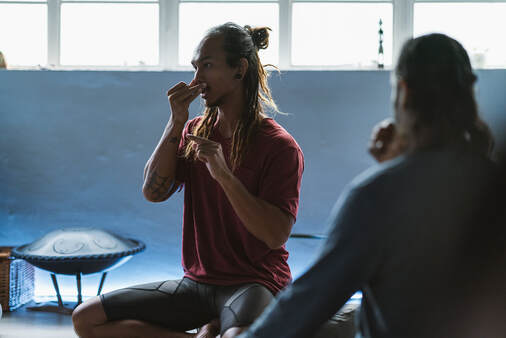
Step 1: Is it snoring or obstructive sleep apnoea?
Most people snore at some point, & loud habitual snorers aren't always ill. Obstructive sleep apnoea (OSA) is different. The upper airway closes off again & again during sleep, breathing pauses, blood oxygen levels dip & the brain wakes you briefly to start breathing again, often without you knowing. It's a serious health problem if left alone, & it's linked with high blood pressure & heart problems.
Ask your partner what they hear, or record a night on your phone. Seek medical advice before trying anything else if you have:
- loud snoring with gasping, choking or snorting;
- pauses in breathing that your partner has noticed;
- daytime fatigue, nodding off at your desk or while driving;
- morning headaches or a dry, sore throat when you wake;
- high blood pressure, or snoring that got worse as your weight went up.
Your GP can refer you to a sleep clinic, where a thorough evaluation usually includes an overnight sleep study. The NHS & the American Academy of Sleep Medicine give the same advice. If you're told it's simple snoring, or mild sleep apnoea that your doctor is happy for you to work on with lifestyle changes, the steps below are where to start.
Why you snore: the common risk factors
Snoring is tissue vibration. Anything that narrows the upper air passages or relaxes the throat muscles makes it more likely:
- Sleeping on your back: the tongue & soft palate fall back towards the throat.
- Mouth breathing: when the mouth opens, the lower jaw & tongue drop back & the airway narrows. In a sleep study of healthy adults, airway resistance was far higher breathing through the mouth than the nose.
- Nasal congestion: nasal allergies, dust mites, a cold or a deviated septum push you into mouth breathing.
- Alcohol & sleeping pills: both relax the throat muscles.
- Weight: extra weight around the neck narrows the airway.
- Other causes: enlarged tonsils, ageing, smoking (which irritates the tissues lining the nose & throat) & hormonal changes such as menopause.
Step 2: What to change tonight
Sleep on your side
This is the quickest win for many people. If you keep rolling onto your back, put a tennis ball in a small pouch sewn to the back of a T-shirt, or wedge a firm bolster behind you. Raising the head of the bed slightly also helps some people. Sleeping positions matter more than most realise: many people snore heavily on their back & much less on their side.
Avoid alcohol in the evening
Avoid consuming alcohol for at least 3 to 4 hours before bed. That after-work beer or the wine at a weekend dinner relaxes the throat muscles. Alcohol consumption is also linked to sleep apnoea: a 2018 review of 21 studies found higher drinking raised the risk by about 25%. Avoid sleeping pills & sedatives unless a doctor prescribed them.
Clear your nose in your HDB bedroom
Singapore's dust mites love a warm bedroom. Wash pillowcases & bedsheets weekly in hot water, keep the air-conditioner filter clean & keep soft toys off the bed. Saline rinses help some people. For ongoing nasal congestion or nasal allergies, ask a pharmacist or your GP about nasal sprays; some sprays shouldn't be used for more than a few days.
Get enough sleep
Overtired people tend to snore more. Keep regular sleep patterns: same bedtime, same wake time, & 7 hours or more. Cut screens & blue light in the last hour, & blackout curtains help if your bedroom faces the corridor lights.
If your partner is still awake
While you work on it, ear plugs or a white noise app help your partner fall asleep first. That's not a fix, but it keeps the peace.
Step 3: A 10-minute daily breathing routine
This is the part most snoring guides skip, & it's what we teach in our BreathEra breathwork classes. The aim is to make nose breathing your body's default & to train the muscles that hold your airway open. In a randomised trial in Chest (2015), adults who did daily mouth & throat exercises for three months snored measurably less, while a control group didn't change. A review of these exercises found similar results for snoring in adults. The studies are small, so the honest promise is "may help", if you practise.
Do this routine once a day, sitting upright. Stop if you feel dizzy or breathless.
- Nose breathing, 3 minutes. Lips closed, tongue resting on the roof of your mouth. Breathe in & out through your nose, slowly & quietly, into your lower ribs. Easier: 1 minute. Harder: keep it up on your walk to the MRT.
- Long, slow out-breath, 2 minutes. In through the nose for 4 counts, out through the nose for 6. This calms your breathing down before sleep. Easier: in 3, out 4.
- Tongue pushes, 1 minute. Press the tip of your tongue to the roof of your mouth & slide it back, 20 times. Then suck the whole tongue flat against the roof of your mouth, 20 times.
- Soft palate "ah", 1 minute. Say "ah" in short bursts, 20 times, feeling the soft palate at the back of your mouth lift. Finish with one long "ah".
- Cheek & jaw, 1 minute. With a clean finger inside your cheek, push the cheek out against it, 10 times each side.
- In bed, 2 minutes. Lie on your side, lips together, & repeat the slow nose breathing as you fall asleep.
If your nose often feels blocked, a gentle breath hold can help: breathe out softly, pinch your nose & nod your head until you feel a moderate urge to breathe, then let go & breathe in calmly through your nose. Rest a minute & repeat up to 5 times. Skip this if you have high blood pressure, a heart condition, are pregnant or have panic attacks.

Want the exercises in more detail, with easier & harder versions & a 4-week plan? Our founder sets them out in breathing exercises to stop snoring, & compares home remedies in 3 best ways to stop snoring naturally.
Step 4: Nasal strips, mouth tape & other aids
Nasal strips & internal nasal dilators
Nasal strips stick across the bridge of the nose & gently lift the sides, while internal nasal dilators sit just inside the nostrils. Both aim to open the nasal passages. They're worth a try if your nose feels narrow at night, & you'll find them at Watsons & most pharmacies. Our founder compares local brands in this nasal strips guide.
Mouth tape
Mouth tape keeps your lips together at night so you breathe through your nose. The research is limited: a 2025 review of 10 studies found mixed results & warned it can be risky for people whose nose is blocked. Only try it if you can breathe comfortably through your nose for 20 minutes while awake, & never if you have suspected sleep apnoea, a blocked nose, or after alcohol or sedatives. It's not for children unless a doctor advises it. Use a tape made for the mouth, such as MyoTape or Therapin's mouth tape (Watsons also stocks mouth tape), & start with 20 minutes while awake.
Lose weight & stay active
If you carry extra weight, losing some of it often helps. In a large long-term study, a 10% drop in weight predicted about a 26% drop in breathing problems during sleep. Weight management works best with regular strength training & daily walking, not crash diets.
Quitting smoking
Smoke irritates & swells the lining of your nose & throat. Quitting smoking is good for your sleep as well as your heart & lungs.
Snoring treatment options in Singapore compared
Here's who each option suits & who provides it. Start at the top & work down; the medical treatment options lower down need a doctor or dentist.
| Option | Who it suits | Who provides it |
|---|---|---|
| Lifestyle changes (side sleeping, no alcohol at night, weight, clear nose) | Everyone who snores | You, with your GP's advice |
| Breathwork & tongue & throat exercises | Simple snorers & mouth breathers; alongside treatment for sleep apnoea if your doctor agrees | You at home; a breathwork class or a trained coach |
| Nasal strips or internal nasal dilators | People whose nose feels narrow or blocked at night | Pharmacies such as Watsons |
| Mouth tape | Mouth breathers with a clear nose & no suspected sleep apnoea | Pharmacies & online; start while awake |
| Dental mouth guard (oral appliance) | Snorers & some people with sleep apnoea, often when the lower jaw sits back | A dentist, often on a doctor's referral |
| Continuous positive airway pressure (CPAP) | People diagnosed with moderate to severe obstructive sleep apnoea | A sleep clinic or respiratory medicine doctor |
| Surgery or minimally invasive procedures | Clear structural causes (e.g. enlarged tonsils, a deviated septum) when other options haven't worked | An ENT surgeon |
When to see a doctor about snoring
See your GP if the red flags above apply, if snoring affects your sleep quality or your partner's, or if lifestyle changes haven't helped after a few months. Your GP can check your nose & throat, look for a medical condition behind it & refer you to a sleep clinic or ENT. If sleep apnoea is confirmed, CPAP therapy (positive airway pressure through a mask) is the usual first treatment, & it's one of the most effective ways to treat snoring caused by sleep apnoea. Breathing exercises can sit alongside it, never instead of it.
How MSMC can help you breathe better at night
At MSMC we're a sports medicine gym. We don't diagnose or treat sleep apnoea, & we work alongside doctors & physiotherapists. What we can do is teach you to breathe well & get stronger & fitter, which supports everything your doctor recommends.
1. BreathEra breathwork class
BreathEra was created by our founder & blends nose breathing, slow breathing & gentle breath holds. In a small group, a trained coach watches how you breathe & corrects what you can't feel yourself, like a mouth that drifts open or shoulders that rise with each breath. See our BreathEra breathworks class & our breathwork class in Singapore page for the schedule.
Try a class for 10% less: use code READ10 at checkout for 10% off one class (one use per person; classes only).
2. A $190 full assessment with a sports medicine trainer
If weight, posture or low fitness are part of the picture, start with our full assessment ($190). A sports medicine trainer tests how you move & what's holding you back, then builds a plan, which can include personal training to help you lose weight safely, get stronger & build breathing into your workouts. If you use a breathing trainer at home, read our guide on how to use a breathing training device safely.

Not sure where to start? Here's what happens when you contact us
- Message us on WhatsApp at +65 8973 7619. Tell us you snore, how long it's been going on & whether a doctor has checked you.
- We ask a few questions. If anything sounds like sleep apnoea, we'll tell you honestly to see your GP or a sleep clinic first.
- We suggest one first step: a BreathEra class if you mainly want to learn nose breathing, or the $190 full assessment if weight, fitness or pain are part of it.
- You book a time that suits you. We're at 151A Kitchener Road #02, near Farrer Park MRT, by appointment, closed Sundays & public holidays.
- You leave with a simple plan you can practise at home.
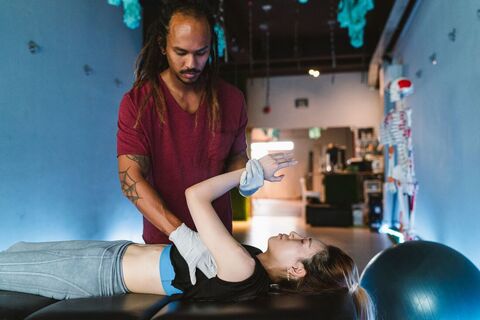
Are you a personal trainer, yoga teacher or therapist with clients who snore? Our sister institute ITI runs the BreathEra Recovery System instructor certification. Start with ITI's guide to breathing retraining exercises for clients who snore.
FAQs
How can I stop snoring naturally at night?
Sleep on your side, avoid alcohol for 3 to 4 hours before bed, keep your nose clear & breathe through it, & practise nose breathing & tongue & throat exercises daily. These may reduce snoring within weeks. If you gasp, choke or stop breathing in your sleep, see a doctor first.
Is snoring 100% curable?
Not always. Many people snore less with lifestyle changes & exercises, but snoring caused by structural problems or sleep apnoea may need a dentist's mouth guard, CPAP or surgery. A doctor can tell you which applies to you.
What exercises strengthen the soft palate?
Saying "ah" in short, repeated bursts lifts the soft palate. Tongue slides along the roof of the mouth & pressing the whole tongue up against it train nearby muscles. Do 20 of each daily for at least a few weeks.
What kind of doctor should I see for snoring in Singapore?
Start with your GP. They can check your nose & throat & refer you to a sleep clinic for an overnight sleep study, or to an ENT specialist if there's a structural cause.
Why am I suddenly snoring so badly?
Common reasons are weight gain, a cold or nasal allergies, more alcohol, new medication such as sleeping pills, poor sleep, or hormonal changes. If it comes with gasping or daytime fatigue, see your GP.
Can a humidifier help with snoring?
It may help if dry air from the air-conditioner irritates your nose & throat, but it won't fix snoring caused by sleeping on your back, alcohol or sleep apnoea. Clean it often so it doesn't grow mould.
Does MSMC treat snoring or sleep apnoea?
No. MSMC is a sports medicine gym, not a medical clinic. We teach breathwork & offer a $190 full assessment & personal training, & we'll always point you to a doctor if your snoring needs one.
Start breathing better tonight
Snoring often improves with small, steady changes: your side, your nose, your evenings & 10 minutes of practice a day. If you'd like a coach to show you how, join a BreathEra breathwork class, or book a $190 full assessment by messaging us on WhatsApp at +65 8973 7619.