
Sound bath vs meditation: both help you switch off, but they work in different ways: in a sound bath you lie still while gongs & singing bowls hold your attention for you, while in meditation you train your own attention, usually on your breath. If your mind races, you're new to this or you want an easy way to unwind before sleep, a sound bath is the gentler start; if you want a daily habit with stronger research behind it, meditation wins. Many people in Singapore do both: MSMC (Movement & Sports Medicine Centre) on Kitchener Road, near Farrer Park MRT, runs a sound bath once a month, & you can meditate at home in between.
This guide compares sound healing & meditation side by side for readers in Singapore: what you actually do, what to expect, how each feels, what the research says about sleep & anxiety, who each suits, & how to use them together.
Key facts: sound healing or meditation?
- Sound bath: you rest & listen while a guide creates waves of sound. Passive, little effort, no experience needed; a natural choice for deep relaxation.
- Meditation: you rest & gently guide your attention, for example to your breath or a body scan. Active, takes practice, free.
- Research: mindfulness has far more research behind it; sound healing studies are few & early.
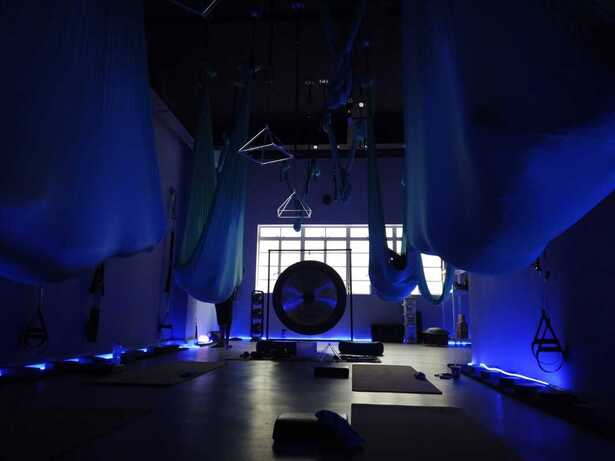
- Sound bath at MSMC: you lie cocooned in a soft aerial hammock. Once a month, in the first week of each month. Check the Momence schedule or WhatsApp for the next date. Price (as of November 2026): booked like MSMC's other classes; check Momence for the price.
- Also at MSMC: Breathera Breathworks classes, $45 per 55-minute class, maximum 9 people.
- Where: MSMC, 151A Kitchener Road #02, Singapore 208526, near Farrer Park MRT.
- How to book: on Momence, or WhatsApp +65 8973 7619. Closed Sundays & public holidays.
What is the difference between a sound bath & meditation?
The biggest difference is where your attention comes from.

A sound bath is a form of sound healing (you may also hear sound therapy) where participants typically lie on a yoga mat (at MSMC, in a soft aerial hammock), while a guide or sound healer plays a mix of instruments, such as bowls, gongs, Himalayan singing bowls, crystal singing bowls, chimes, drums & tuning forks, to create a soothing soundscape. The soothing sounds, long tones, resonance & vibrations give your mind something easy to follow, so a busy mind gets a break & you don't have to work at being calm. You just hear, feel the vibrations & let go. You can drift into a deeply relaxed state, daydream or even nod off. Many people find it a peaceful space to explore deep relaxation without effort. For a full guide, read sound bath in Singapore: what happens, how it feels & who it's for.
Meditation is a practice of training your attention, & a gradual process. In mindfulness, for example, you stay quiet & still, notice your breath, body or thoughts, & each time your mind wanders you gently bring it back. You can do it alone, almost anywhere, with no equipment. It's a skill, so it gets easier with practice.
Is a sound bath the same as music therapy or sound therapy?
No. Music therapy is a clinical treatment, delivered by trained music therapists with set health goals, for example in hospitals. A sound bath is a wellness session for relaxation & well being, without a treatment plan, & you don't need to sing or make music yourself. Some practitioners call a more structured, one-to-one session sound therapy.
What instruments are used: gongs, singing bowls & crystal singing bowls
A sound bath may use gongs, singing bowls & crystal singing bowls, along with chimes, drums or tuning forks. Each of these instruments creates layered vibration & different frequencies, from the deep swell of a gong to the clear ring of a single bowl. An intuitive practitioner often plays to the room rather than to a fixed script, & different techniques give the session its depth & character. Many people find it deeply relaxing; some call that the magic of a good session, but you don't need to believe anything about energy to enjoy the space & the sound.
Is sound healing a form of meditation?
Yes, in a way. A sound bath is often called sound meditation, because listening to the sounds is the thing you focus on, in the same way the breath is in breathing practice. The difference is that the sound does most of the work for you, leading many people into a meditative state without trying.
Sound healing & meditation compared side by side
| Sound bath | Meditation | |
|---|---|---|
| What you do | Lie still & listen to gongs, singing bowls & other instruments | Rest & guide your attention, often to the breath or body |
| Effort | Very little, passive | Active; takes practice, especially at first |
| Need a guide? | Yes, or a recording | No, though guided sessions help beginners |
| Where | A studio, or at home with a recording | Anywhere: home, the MRT, your desk |
| How long | Often around an hour | A few minutes to 20 minutes or more |
| Cost | Usually a paid class | Free |
| Research | A few small, early studies | Many trials & reviews |
| Best for | Deep relaxation, busy minds, beginners, a monthly reset | A daily habit, building calm & focus over time |
Which helps you fall asleep: a sound bath or meditation?
For the long term, mindfulness has better evidence. In a 2015 randomised trial of 49 older adults with sleep problems, a six-week mindfulness course improved sleep quality more than sleep hygiene education did.
Sound healing hasn't been studied much for sleep. What we do know is that calming sound & music can help you wind down: a 2022 Cochrane review found that listening to recorded music may improve sleep quality in adults with insomnia (read the review). Many people say they sleep deeply on the night of a sound bath session, though it isn't known whether it changes sleep patterns over time, & some drift off during it, which is perfectly fine.
A practical way to use both: come to a sound bath for a deep monthly reset, & use a short body scan in bed on other nights. If you've struggled to sleep most nights for weeks, see a doctor; the NHS guide to insomnia explains what usually helps.
Which is better for anxiety & managing stress?
Again, mindfulness has the stronger research. A 2014 review of 47 trials found moderate evidence that mindfulness programmes ease anxiety, low mood & pain, including chronic pain, with small to moderate effects. It wasn't better than other proven treatments, such as medication, exercise or talking therapies.
For sound healing, a 2017 study of 62 adults found people reported less tension, anger, fatigue & low mood after a singing bowl session, & the drop in tension was bigger in first-timers. But there was no comparison group, & a 2020 review said there are too few good studies to recommend singing bowls as a therapy yet (read the review).
So a sound bath can help ease stress & improve mood on the day, especially if staying still has felt frustrating. A regular mindfulness practice is more likely to help with managing stress day to day.
What if silence makes me more anxious?
For some people, staying with their thoughts in silence feels uncomfortable at first. Sound healing can be easier because there is always something to listen to. But if you live with an anxiety disorder, panic attacks, PTSD or depression, see a doctor first. Both can bring up strong feelings & emotions, & neither replaces proper mental health care & support.
What happens in your body during deep relaxation?
When you relax deeply, your nervous system can shift towards its "rest & digest" mode. Your breathing slows, your heart rate tends to settle & muscle tension often eases. Researchers are still studying exactly what happens in the brain. Sound healers often talk about frequencies, harmony, energy or energetic shifts; those ideas haven't been well tested, so treat them as a description of how it feels rather than proven science. Both practices aim for this state of deep relaxation; they just take different routes:
- A sound bath works from the outside in. The sound waves & vibrations, especially from a large gong, give your body & mind something to rest on.
- Meditation works from the inside out. You calm the mind through your own focus & awareness, & the body follows.

The key difference in benefits is that mindfulness builds up over time: the skill goes with you into daily life, helping you find balance in a busy moment. Sound healing gives a deep, short-term reset. Many people look forward to it, & some describe inner peace, clarity, a floating feeling or a sense of emotional release afterwards.
Who should choose a sound bath, & who should choose meditation?
A sound bath may suit you if:
- Your mind races & you've given up on silent practice before.
- You want deep rest with no effort, as a treat or a reset.
- You like an immersive experience, new sensations, the feel of gentle vibrations & group sessions.
- You'd rather be guided than practise alone.
Meditation may suit you if:
- You want something you can do every day, for free.
- You want calm & focus you can use anywhere, like before a meeting or on a crowded train.
- You're sensitive to loud noise or don't enjoy group classes.
Are there side effects, & who should not do a sound bath?
Both are generally safe, & side effects are usually mild. After a sound bath, some people feel light-headed, emotional or very tired for a short while, so get up slowly & drink some water. With meditation, a small number of people find that sitting with their thoughts brings up uncomfortable feelings; if so, keep sessions short or try a guided one.
Gongs can be loud & intense, & fill the whole room. At MSMC you rest in an aerial hammock, so if you have balance problems, vertigo or a back condition, ask the team on WhatsApp first. See a doctor first if you have epilepsy or a history of seizures, are pregnant, have tinnitus or sound sensitivity, have a pacemaker or another implanted device, or have a mental health condition. During a session, participants can always cover their ears, sit up or step out.
How do I start meditating?
Keep it simple. There are many meditation techniques, such as breath focus, body scans & loving-kindness; the breath is the easiest place to start, & no equipment is essential. Set a simple intention, such as resting for five minutes. The NHS guide to meditating for beginners says there's no rule about how long to meditate, but 20 minutes is a good guide. If that feels like a lot, start with five:
- Find somewhere quiet & comfortable, & close your eyes.
- Take a few slow, deep breaths: in through your nose, & out a little longer.
- Notice the breath moving in & out. When your mind wanders, & it will, gently bring it back.
- Finish by noticing how your body feels, then open your eyes slowly.
Guided meditation, where someone talks you through it on an app or recording, is a helpful way in. For more structure, read our meditation for beginners guide.
Can you do both?
Yes. Both sound baths & meditation have benefits, & they work well together. Sound healing shows you what deep relaxation feels like, a bit like a guided journey, which makes it easier to find that state again when you meditate at home. At MSMC, you can join the monthly sound bath, try a breathwork class for a more active way to calm your nervous system, & practise on your own in between to relax. If stiffness or pain stops you from lying or sitting comfortably, gentle stretching can help too; see what to expect from a stretch therapy session.
Sound bath FAQs
Is a sound bath better than meditation?
Not better, just different. A sound bath is easier & more passive, so it suits beginners & busy minds. Meditation takes more practice but has stronger research behind it & can be done every day for free.
Do sound baths help you sleep?
Many people feel sleepy & sleep well afterwards, but there's little research on sound baths & sleep. Calming music has some evidence for better sleep quality, & mindfulness has been shown to improve sleep in older adults.
Do sound baths help with anxiety?
Early studies suggest people feel less tense & anxious straight after a session, but the evidence is limited. If anxiety affects your daily life, see a doctor; a sound bath can support proper care, not replace it.
Do I need experience for sound healing?
No. You just lie back, get comfortable & listen; at MSMC you rest in an aerial hammock, & no aerial experience is needed. Many people come to sound healing because they find staying still hard.
How often should I do a sound bath?
There's no set rule. MSMC runs its sound bath once a month, in the first week of each month, which works well as a regular sound healing reset alongside short daily practice at home.
Is lying in a hammock safe?
For most people, yes. The soft aerial hammock holds your whole body, & your teacher shows you how to get in & out of it. If you have balance problems, vertigo, a back or neck problem, or any other health concern, WhatsApp the team on +65 8973 7619 before you book.
Is it OK to fall asleep in a sound bath?
Yes. Falling asleep is common & simply means your body relaxed.
Final thoughts: try a sound bath at MSMC in Singapore
If you'd like to feel the difference for yourself, join MSMC's monthly sound bath in Singapore, held in the first week of the month, & start your own sound healing journey. Check the Momence schedule for the next date & book there, or message us on WhatsApp at +65 8973 7619. We're at 151A Kitchener Road #02, near Farrer Park MRT.
Last updated: 21 November 2026. Written by the MSMC team & reviewed by a sports medicine trained trainer.